Eight stand-ins, ten teams: How seriously was PARI Universe taken?

Eight different stand-ins across four teams. For a Tier 1 Dota 2 tournament featuring some of the biggest names in the scene, PARI Universe had an unusually revolving cast of players throughout its group stage and playoffs.
The $250,000 online event concluded on November 1 with Team Spirit crowned champions.
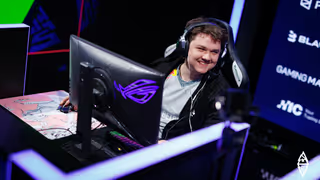

More interestingly, the event saw Team Yandex, 1win, LEGION and Team Liquid all field temporary replacements at various points, sometimes for just a single series before returning to their regular lineups.
PARI Universe stand-in rotations
Team Yandex opened the group stage with Xibbe replacing ATF, who was reportedly experiencing minor health issues. Meanwhile, 1win brought in Mikoto for bzm, initially citing personal reasons for the midlaner's absence. Subsequent reports suggested bzm had simply overslept, leaving Mikoto to compete from Indonesia with approximately 200 ping.
LEGION accounted for three of the replacements, with 4nalog standing in for Stojkov, V-Tune replacing Darklord and KJ stepping in for Kidaro during the group stage. KJ also returned during the playoffs.
Team Liquid made two substitutions for miCKe, first bringing in rincyq for a group-stage series before using Timado during the playoffs. Neither substitution came with a publicly confirmed explanation.
Of course, players fall ill, personal circumstances arise and unexpected absences are hardly exclusive to PARI Universe. But eight different stand-ins across a ten-team event is enough to raise an interesting question: Just how seriously was this tournament being taken?
PARI Universe carried a Tier 1 designation, but with a relatively modest $250,000 prize pool, an entirely online format and no qualification points toward a larger championship at stake, perhaps the urgency was not quite the same as at other premier events.
Then there is the increasingly crowded competitive calendar.
As previously explored in Does Dota 2 need an offseason? and Barely a break: What the new Dota 2 season is already demanding from its players, professional players have little opportunity to step away. Between overlapping tournaments, constant qualifiers, relentless practice schedules and extended periods on the same patch, fatigue and burnout are hardly surprising concerns.
When one Tier 1 event follows another with barely enough time to recover, perhaps teams are becoming more selective about where they commit their full resources.
There is also the matter of tournament credibility. PARI Universe was organized by FISSURE, which has faced allegations of more than $1 million in outstanding Dota 2 prize money from previous events.
Whether that influenced anyone's approach to PARI Universe is unknown, but it adds another uncomfortable question to an already curious situation.
Of course, none of this proves that teams were taking the tournament lightly. Team Spirit and Team Yandex certainly delivered competitive performances, ultimately meeting in the grand final.
Still, the frequency of substitutions is difficult to ignore. Perhaps it was simply an unusual convergence of unfortunate circumstances. Or perhaps, in a scene with no meaningful offseason, an oversaturated calendar and increasingly interchangeable tournaments, not every Tier 1 event can command the same level of commitment anymore.


