The tournaments keep coming. The prize money doesn't

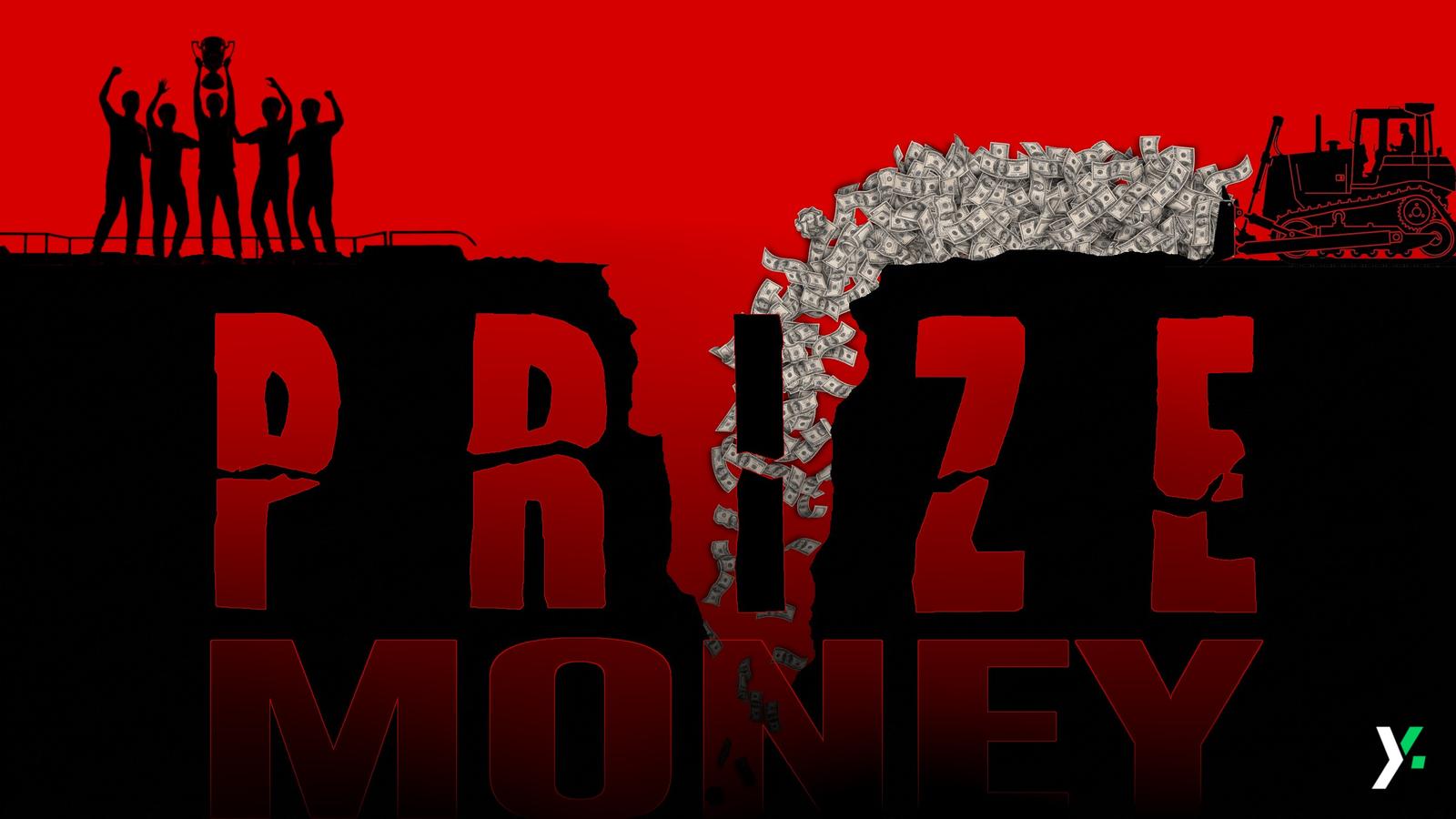
On October 22, ten Dota 2 teams are scheduled to compete in PARI Universe, a new online tournament organised by FISSURE with $250,000 in advertised prize money. There will be matches, broadcasts, sponsors and another champion crowned. By all appearances, it is business as usual.
Except there is the matter of the money from last time.
In July, reports emerged alleging that FISSURE owed more than $1 million in unpaid prize money to Dota 2 organisations, with outstanding payments reportedly dating back to January 2025. Among those named were Team Falcons, Tundra Esports, BetBoom Team, HEROIC, MOUZ and Team Yandex.
Three months later, the questions have hardly disappeared. Earlier this month, former Team Falcons player Andreas "Cr1t-" Nielsen publicly questioned FISSURE beneath its announcement of tournaments planned for 2027, asking whether the organiser intended to pay the money still owed from previous competitions.
It is an extraordinary contrast —an organiser announcing its future while players are still asking to be paid for its past. And for anyone who has followed competitive Dota 2 long enough, it is an unfortunately familiar story.
FISSURE and the money still outstanding
The allegations surrounding FISSURE did not emerge without warning.
In June 2026, the organiser publicly acknowledged outstanding prize money obligations to 15 Counter-Strike 2 organisations, including Team Falcons, FURIA, G2 Esports, Team Liquid and Astralis. The disclosure, published in accordance with Valve's Counter-Strike tournament regulations, stated that FISSURE remained in communication with the affected teams and was committed to settling its obligations.
However, no amounts or payment deadlines were provided. FISSURE's public disclosure concerned Counter-Strike, not Dota 2, and should not be mistaken for confirmation of the separate Dota allegations.
Nevertheless, the players' public complaints remain difficult to reconcile with the organiser's continued announcements. Former professional player Anton "dyrachyo" Shkredov spoke about his experience with FISSURE PLAYGROUND Belgrade 2025, which he won while playing for Tundra Esports. According to the player, he had received only a quarter of the prize money owed to him, despite the tournament having concluded more than a year earlier.
Broader allegations followed shortly afterward citing multiple organisations and industry sources, reported that FISSURE's outstanding Dota 2 prize obligations exceeded $1 million across several events held in 2025.
PARI Universe now adds another $250,000 in promised winnings to a calendar already stretching into 2027. This poses the question if whether it has settled its obligations from the tournaments it has already organised.
A problem almost a decade in the making
In 2017, there was an investigation into unpaid winnings from the 2016 Asian Games for Esports, documenting a familiar collection of delayed payments, unanswered questions and competitors left waiting long after the event concluded.
By 2019, Valve had taken legal action against GESC over approximately $750,000 in unpaid prizes and wages connected to two Dota 2 Minors held the previous year.
The circumstances differed, but the underlying problem was the same. Tournament organisers could promise substantial prize pools, stage their events and leave players, teams and production staff pursuing money that should have followed.
Years later, the pattern continued.
Epulze, once a prominent organiser of Dota 2 competitions, faced mounting allegations of unpaid prizes, talent fees and production costs connected to events throughout 2023 and 2024. The company eventually filed for bankruptcy in Sweden in January 2025, leaving substantial unresolved liabilities. When ChaosGround subsequently acquired Epulze's technology, intellectual property and other assets, the outstanding debts did not transfer with them.
The acquisition may have been legally straightforward, but for those still waiting to be paid, it offered little comfort. The infrastructure could find a new home while the financial consequences remained with the people who had helped build it.

Then there was Elite League.
In March 2025, former BOOM Esports manager Mateus "Cysne" Barbosa published correspondence concerning $92,000 in unpaid tournament winnings from Elite League's 2024 seasons. Organiser Electronic Sports Broadcasting attributed its financial difficulties to problems with its funding partner and disclosed substantial operating losses.
Once again, the explanation did little to change the position of those waiting for payment.
These are different organisations, different circumstances and different financial failures. They should not be treated as interchangeable. But together, they expose an industry that has repeatedly struggled to ensure that advertised prize money becomes money actually received.
The cost of carrying on
There is a peculiar imbalance in esports. Organisers can announce tournaments worth hundreds of thousands, sometimes millions, of dollars, while the people competing are left with comparatively little assurance about when those winnings will arrive. A published prize pool is not the same as a funded prize pool. A tournament result is not proof of payment. And a promise to settle outstanding obligations is not the same as settling them.
For players, prize money is compensation for work already performed. For organisations, it forms part of budgets that support salaries, travel, staff and continued competition. For freelancers and broadcast talent, delayed payments can have an even more immediate impact.
Yet the competitive calendar rarely stops to account for those obligations. Teams still need opportunities to compete. Players still need exposure and results. Organisers still need participants to attract viewers, sponsors and commercial partners. That dependence creates an uncomfortable situation in which the people owed money may also have reasons to maintain relationships with the organisations that owe it.
The result is an ecosystem remarkably capable of moving forward without necessarily resolving what it leaves behind.
Who is responsible?
FISSURE is not the first organiser to face allegations of unpaid prize money, and history suggests it will not be the last. But the recurrence of these cases raises questions beyond any individual company.
What financial assurances should organisers be required to provide before advertising substantial prize pools? Should prize money be secured independently before competition begins? What recourse do teams and players have when payments stretch from weeks into months, or even years?
And what responsibility do tournament partners, sponsors and publishers have when events continue despite unresolved obligations?
There are no simple answers, particularly in an industry where commercial funding, contractual arrangements and jurisdictional differences complicate enforcement. But transparency should not be an unreasonable expectation. Neither should timely payment.
Esports has become extraordinarily good at announcing what comes next. Perhaps it is time to become equally good at accounting for what came before.


