The problem isn't that Dota is dying. It's that success isn't paying

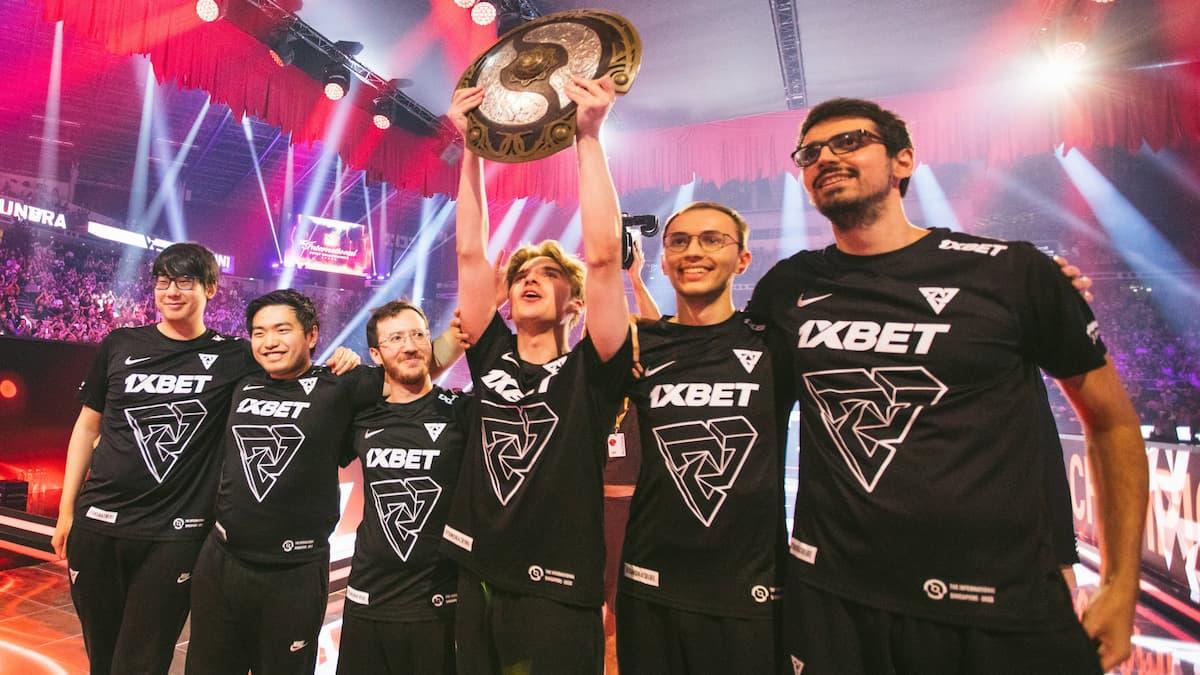
Tundra's exit and HEROIC's recent departure raise a difficult question for Dota 2: if winning, qualifying, and staying relevant aren't enough to make the numbers work, what does success actually look like anymore?
When Tundra Esports announced it was releasing its Dota 2 roster, the reaction was immediate.
Not because roster changes are unusual. In fact, it is the norm — Dota has always been built on instability. Players move, teams rebuild, organisations come and go.
The surprise was that Tundra wasn't leaving from a position of failure.
The roster is already confirmed for both the Esports World Cup and The International 2026. It remains one of the most recognisable names in competitive Dota and, despite a few shaky results in recent months, one of the strongest teams in the world.
Just weeks earlier, HEROIC exited Dota 2 as well, walking away from what had become the most successful South American project of recent times.
Neither departure fits the traditional narrative of failure.
Which raises an uncomfortable question:
If qualifying for the biggest events in the world isn't enough, what exactly does success look like in Dota 2 anymore?
Success used to have a simple definition. For most of esports history, success was easy to measure.
- Win tournaments.
- Qualify for The International.
- Build a fanbase.
- Attract sponsors.
The assumption was that competitive success would eventually lead to financial success. But that logic feels increasingly uncertain.
Tundra won tournaments. HEROIC became a cornerstone of South American Dota. Both organisations achieved results that most teams would dream of. Yet both decided those results were no longer enough reason to stay.
If competitive success is no longer guaranteeing organisational stability, the obvious explanation would be that interest in Dota itself is fading. The problem is that the numbers don't really support that conclusion.
Dota isn't disappearing
This is where the familiar "dead game" argument usually appears.
It has been appearing for more than a decade. And yet Dota stubbornly refuses to die.
The game remains one of the most-played titles on Steam. Major tournaments continue to draw significant audiences. The International still commands attention across the esports world. Players still dedicate their lives to reaching the top.
By most traditional measures, people are still playing, and people are still watching.
The problem is that neither of those things automatically creates a sustainable business.
Viewership matters because sponsors care about audiences. Player numbers matter because healthy games attract attention. But those metrics only matter if they eventually translate into revenue.
For many organisations, that connection has become increasingly difficult to monetise.
The esports correction never really ended
Part of the problem stretches beyond Dota itself.
For years, esports was sold as the next great growth industry. Investors poured money into organisations. Valuations skyrocketed. New sponsors arrived chasing younger audiences and future opportunities.
The expectation was simple: growth would continue indefinitely.
Instead, reality arrived.
Many organisations discovered that large audiences do not automatically become profitable businesses. Sponsorship markets tightened, investor enthusiasm cooled, and the industry began correcting itself. Years later, that correction still appears to be ongoing.
The question may not be why organisations are leaving Dota.
The question may be why so many believed the economics worked in the first place.
South America offers a warning
The story becomes even clearer when viewed through South America.
Years ago, organisations like Beastcoast entered the region backed by resources many local organisations simply could not match. Salaries rose, competition improved, and players benefited.
Yet even as the region produced results, stars, and international relevance, stability remained elusive. Organisations continued to cycle in and out of the scene. Beastcoast exited. paiN Gaming returned only to leave again months later. More recently, HEROIC walked away despite backing one of the strongest South American projects of the modern era.
That does not necessarily point to a failure of South American Dota. If anything, the region has consistently proven it can produce competitive teams. The concern is whether the business model surrounding those teams is sustainable enough to keep organisations invested for the long term.
So what does success look like?
That may be the question Tundra's exit leaves behind.
Because if a team can already have won The International just two years ago, continue to compete at top levels, confirm their placement for TI and for EWC, contend for and seize championships, attract fans, and still be released, then competitive success clearly isn't the whole equation.
Dota's problem is not that nobody cares. People still care deeply.
The problem is that caring and paying are not the same thing.
Tundra's departure doesn't prove Dota is dying. It does suggest that the definition of success in esports may be changing.
And if winning isn't enough anymore, the industry needs to figure out what is.