Shocking the scene: Dota 2's most surprising pre-TI moves

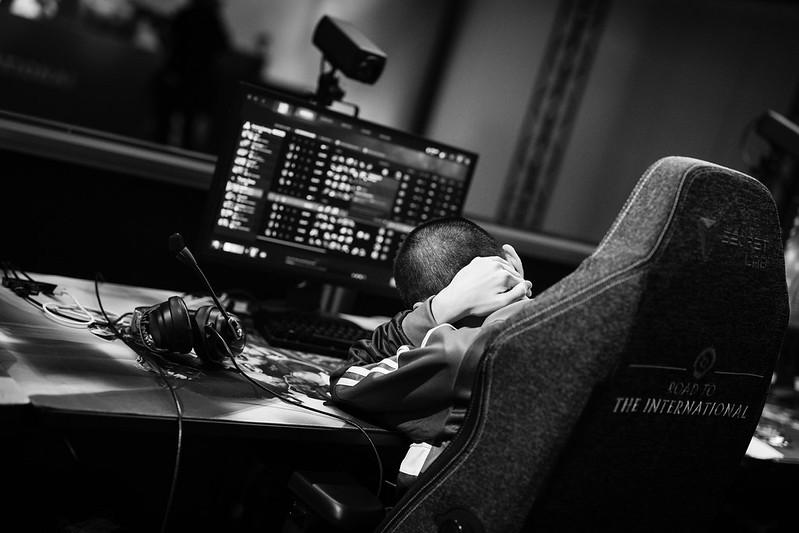
The TI season is supposed to follow a familiar script. Rosters grind through qualifiers, borderline teams scramble to lock in org deals, and last-minute signings give fringe squads a shot at the biggest prize pool in esports. Organisations hunting exposure and sponsor eyeballs swoop in to slap their logo on a qualified stack — what the community sometimes calls "TI tourism" — and everyone more or less knows the drill.
That's what makes it so jarring when the opposite happens. When teams don't make it to TI, or orgs drop rosters that were actually performing — that's when fans lose their minds. Because this game is supposed to reward effort. You grind, you qualify, you go. The idea that a business case could override all of that still feels wrong, even when you understand the economics.
HEROIC's exit from Dota 2 this week is the latest reminder that the numbers often don't care about the narrative.
HEROIC Exit Dota 2 — The Numbers Don't Add Up (2026)
HEROIC weren't a random org dabbling in Dota 2 for clout, they were the real deal. In just two years under the Norwegian banner, this South American roster became the first SA team to win a Tier 1 tournament — taking home the PGL Wallachia Season 2 trophy — and placed top 6 at The International 2025. They were the best SA team in the world, full stop.
So when HEROIC announced they were shutting down their entire Dota 2 division, the community genuinely did not see it coming. The timing made it worse: the announcement landed days before the roster was due to compete at DreamLeague Season 29, and with TI 2026 qualifiers on the horizon.
The organisation didn't dress it up.
"Despite competitive success, a growing fan base, and significant commercial efforts, the financial results ultimately fell short," they wrote.
Chief Gaming Officer Robin Nymann was equally blunt on X: "The unfortunate reality is that Dota is a tough game to commercialise."
Here's the thing — if you squint, this makes sense. High player salaries, a game with a shrinking casual audience, sponsors who struggle to see a direct return on investment from a team that's top 6 at TI but not winning it. The business logic tracks. But for fans watching a team that had literally just been signed an assistant coach weeks prior to help them prepare for TI and EWC — it was a gut punch.
Gaimin Gladiators Withdraw from TI — A First in 14 Years (TI 2025)
If HEROIC dropping their roster before TI is shocking, Gaimin Gladiators not showing up to TI is historic. It had simply never happened before.
GG were one of seven directly invited teams to The International 2025, an invite earned off back-to-back TI finals appearances in 2023 and 2024, plus an Esports World Cup title in between. Quinn, Ace, tOfu, and the squad were the face of Western Dota for a sustained stretch.
Then, two weeks before TI 2025 kicked off in Hamburg, Valve announced that the Gaimin Gladiators had withdrawn. What followed was a messy public exchange of contradictory statements that never fully resolved.
Valve said they'd spoken directly with the players and the players were "unable to come to an agreement with their organisation." GG co-founder Nick Cuccovillo suggested the players had requested to compete at TI as independent players, with their contracts terminated — and GG agreed to that request, informing Valve accordingly. Midlaner Quinn then posted a thread on X flatly contradicting that version of events, saying the decision was made "unilaterally by Gaimin Gladiators" and that the players had communicated in writing that they were "ready, willing and able" to compete under the GG banner.
Neither side revealed what actually caused the breakdown. The legal implications Cuccovillo referenced stayed private. What didn't stay private was the community reaction. Andreas "Cr1t-" Nielsen, who'd gone through OG's own roster chaos years before, wrote that players "dedicate their entire lives to this tournament." Liquid coach Blitz called it "the most shocking thing I've ever seen in Dota."
Liquid Drop Matumbaman Days Before EPICENTER (Pre-TI9, 2019)
Lasse "MATUMBAMAN" Urpalainen had been with Team Liquid since October 2015. He was on the roster that won TI7. He was one of the most established core players in European Dota. Then, just days before EPICENTER Major — the final Major of the 2018-2019 DPC season, and with TI9 already on the horizon — Team Liquid parted ways with him.
The timing alone made it a story. Teams don't drop foundational players in the closing weeks of a DPC season if things are going well. Liquid had secured enough DPC points for a direct invite to TI9, and crucially, the player swap didn't threaten that invite provided they stayed above the 20% point-deduction threshold — which they did. But the optics of cutting a TI-winner and club legend right before a Major, with no replacement announced yet, raised immediate questions.
Matu landed on his feet — eventually joining Team Secret, where he went on to win a Major — but in the moment, it was another example of the business side of Dota 2 operating on a timeline that fans and even players often don't see coming.
Forward Gaming Dropped Three Weeks Before TI9 (2019)
The players of Forward Gaming had done everything right. The North American stack that had ground through qualifiers, built chemistry, earned their spot. Three weeks before the biggest tournament of the year, they had an organisation, a banner, and a plan.
Then Forward Gaming's CEO announced he could no longer fund the team. Financial problems. The roster was released.
Within three days, they had a new home: Newbee, the legendary Chinese organisation that had failed to qualify for TI9 under their own steam, signed the entire Forward Gaming roster under the "Newbee International" banner to represent them at TI in their own country.
It was a genuinely symbiotic arrangement — a qualified NA stack needed an org, and a historic Chinese org needed a way into TI in Shanghai. But it also underscored the brutal fragility of roster stability at the tier-2 level. You can qualify for TI and still not know, three weeks out, whether you'll have a jersey to wear when you get there.
OG Loses Fly and s4 Weeks Before TI8 (2018)
This one still stings for OG fans, and it still gets talked about.
Tal "Fly" Aizik and Johan "N0tail" Sundstein had been playing together since Heroes of Newerth. Over nine years of friendship and competition, they built OG from scratch — from the Monkey Business stack to the team that won the very first Dota 2 Major. Fly was as close to irreplaceable in OG's identity as any player could be.
In May 2018, weeks before TI8 and days before the China Dota 2 Supermajor, both Fly and s4 quietly departed OG for Evil Geniuses with no warning. OG had to withdraw from the Supermajor entirely and scramble to rebuild.
The roster they ended up with — Sébastien “Ceb” Debs stepping out of his coaching role, Topias "Topson" Taavitsainen coming from nowhere as an unknown mid, Anathan "ana" Pham returning from a break — was considered a disaster in the making. They qualified through open qualifiers as heavy underdogs.
Then they won TI8. Then they won TI9.
Fly has since acknowledged that how he handled the departure was wrong, and that he regrets it. N0tail said very little publicly about it at the time. But the image of the two of them meeting in the TI8 bracket — N0tail's hastily-assembled squad versus Fly's EG — became one of the most loaded moments in competitive Dota 2 history.
The betrayal, the redemption arc, and the "revenge" TI win is one of the greatest stories the scene has ever produced. But in the moment, in May 2018, the pre-TI news cycle was pure chaos.
Wings Gaming Fall Apart After TI6 Victory — And Get Banned (2017)
Wings winning TI6 was one of the great underdog stories. A young, unconventional Chinese lineup with wide hero pools and chaotic playstyles that the rest of the scene hadn't figured out how to deal with. They were world champions.
Six months later, the whole team had left. The players cited unpaid salaries for over three months and a 30% cut taken from their TI6 prize money — and they walked out mid-season, just before the Kiev Major, to form their own team called Team Random.
That's when it got ugly. ACE — the organisation that governs and regulates the Chinese competitive Dota 2 scene, historically controlled by LGD and iG — issued the five former Wings players a lifetime ban from competing in any Chinese tournaments, with the exception of Valve-run Majors and The International. Any Chinese organisation that signed them would also be penalised.
The move effectively ended Wings Gaming as a competitive entity and left five players who had just been world champions scrambling to find a way to continue competing outside of China. There was then further internal drama, with players accusing each other of trying to cut private deals with Wings' owner to save their own spots while leaving teammates exposed to the ban.
The five players who'd won TI6 together couldn't be a part of China's next TI qualifier cycle. World champions were locked out of their home region within a year of lifting the trophy.
Team Secret / EG / Liquid — The Musical Chairs Season (Pre-TI6, 2016)
This one requires a flowchart to follow properly, which is part of why it belongs on this list.
Heading into TI6, Team Secret already had Artour "Arteezy" Babaev and Saahil "Universe" Arora on board after kicking Omar "w33" Aliwi and Rasmus "MISERY" Filipsen mid-season. Then Universe left Secret to rejoin EG ahead of TI6. Kanishka "BuLba" Sosale came the other way. Kurtis "Aui_2000" Ling joined as a substitute/coach. The roster had been shuffled so many times that it barely resembled what had started the season.
Both teams lost their invites and had to fight through the open qualifiers to get to TI6.
The reason this makes the "pre-TI shocking" list is less any single move and more the sheer cumulative absurdity of the roster situation heading into TI6.
Fnatic and Era — Valve Forces the Issue (TI4, 2014)
This one sits at the intersection of player welfare and organisational politics, and Valve's intervention made it genuinely unprecedented.
Heading into TI4, Fnatic found themselves in a dispute with support player Adrian "Era" Kryeziu. The organisation's position was that Era was suffering from anxiety and panic attacks to a degree that prevented him from playing competitively. Era's position was that he was healthy and that the team was using a manufactured health issue to push him out.
Valve — who required teams to compete with their registered rosters or face removal from the event — stepped in. They insisted Era play.
It was one of the rare moments where Valve's typically hands-off approach to internal team politics gave way to direct intervention. The fact that it happened weeks out from TI, with a qualifying team's participation on the line, gave the whole episode a frantic quality that left a mark on how fans thought about player protection and roster disputes.
The Pattern
Every one of these stories is different — contract disputes, financial collapses, friendship betrayals, regulatory bans, player welfare controversies. But they share a common thread: the business of Dota 2 operates on a logic that frequently collides with the emotional logic of the sport.
Fans follow players, care about storylines, invest in journeys. Orgs and regulatory bodies make decisions based on spreadsheets, legal agreements, and institutional power. Those two realities were always going to produce moments like these — moments where the thing you were looking forward to just... doesn't happen, or can't happen, or happens in a completely different shape than you expected.
With HEROIC's departure, the South American scene has lost one of its most successful representatives. Whether that stack finds a new home in time for TI 2026 qualifiers will be one of the bigger stories of the coming weeks. And if history is anything to go by, whatever happens next will probably be stranger than anyone predicted.