Rewind: How FaZe cemented a legacy - ESL One New York 2017

The year is 2015, a young kid tunes into Kinguin at DH Open Summer 2015 and watches with wide open eyes… they suck.
Still, a spark goes off: a team of players from different countries - what a cool idea. At that point, all the best teams were from one country, and if they weren’t, they’d at least speak the same language. So the concept of a multinational team, a roster where stars like olofmeister and GuardiaN, that year's #1 and #2 players, could be together, was enticing, a dream even.
That young kid was me; in fact, that Kinguin game is the very first match of CS I ever watched.
I didn’t truly understand the gravitas of what a multinational team was at the time, but I remember noticing it was different and becoming a fan of this Kinguin team. Fast forward to the end of that same year, and Kinguin is now G2. Then fast forward another few months, to January 2016, and FaZe Clan takes over the roster. How great, I know that brand; they're on YouTube.
That’s when things really clicked for me, and I started watching every game.
Now, to avoid making this a college-length FaZe Clan history lesson, I’ll try to keep it short. FaZe added allu, kioShiMa, and karrigan, who were basically leftover scraps from other benchings and shuffles. They have some relative success but fail to become a playoff team, so they kick aizy (sorry aizyesque), and sign NiKo in 2017.
A huge move at the time, and in the landscape of CS history.
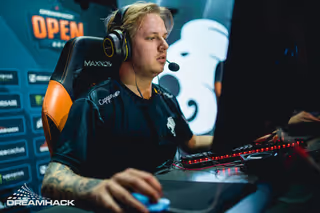

NiKo at this point had been carrying MOUZ for a while, and as someone with Bosnian roots, this was like an extra Christmas to me. What helped was that in the first half of the year, they debuted strong at IEM Katowice, got dubbed “Rockstar FaZe,” stayed competitive, and eventually won at StarLadder StarSeries S3, the first time an international roster had won an S-tier event ever.
I watched it live and remember getting seriously emotional having followed this project and process throughout. The dream was achieved, and the wall had been broken; FaZe Clan proved that it was possible, with a Bosnian player no less. You couldn’t help but wonder, what was next for this team?
Three months later, they were thrown out of the Major 0-3, one of the biggest embarrassments in history until that point.
RobbaN, moments before disaster | Image: PGL
Assembling a team
I don’t remember exactly what I was thinking, but the fact that kioShiMa still has me blocked on Twitter for my "insight" into his performance tells me I probably wanted changes.
FaZe agreed with me, but I had no idea, because I was in Bosnia vacationing at our family's newly built house that had no WIFI yet. It took weeks for me to get access to the internet, and when I did, a wave of DMs hit me: “Did you see the news?” I click on an HLTV link that says “GuardiaN joins FaZe”; next to it is another article: “olofmeister joins FaZe.”
I could scream.
This was the dream, a true super team with two players who were the best in the world, just a year and a half ago. Sure, that did carry some caveats; both players had wrist surgeries, which meant we had likely seen their peaks already. But who cares? An already great core of NiKo, karrigan, and rain now had olofmeister and GuardiaN instead of kioShiMa and allu.
Full of excitement, I sat up to watch their first event, DreamHack Masters Malmo, a full-circle moment from Kinguin… and they got bounced in groups.
The run
Maybe for that reason, no one expected what we saw next.
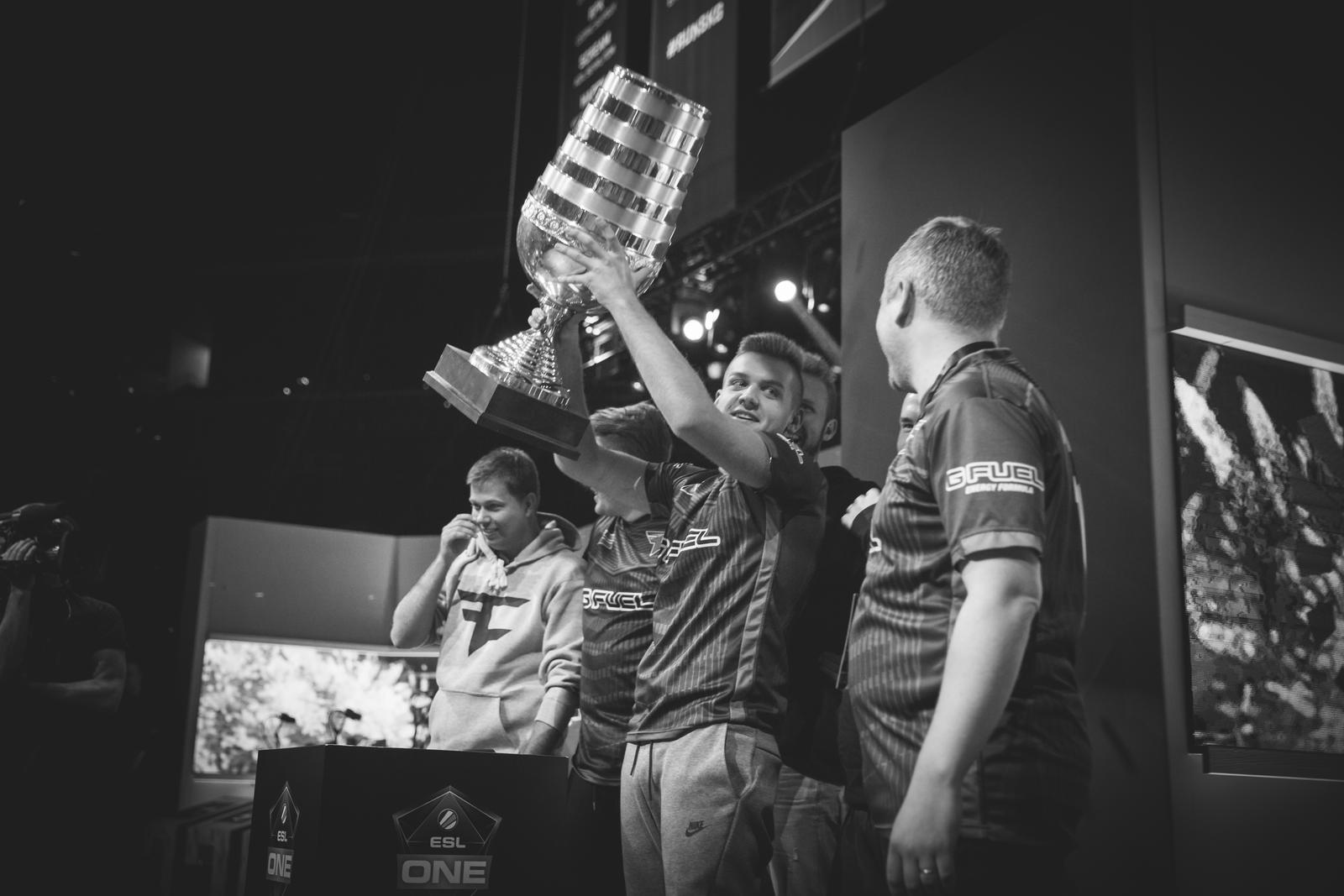
Not only did FaZe win the event, but they won it in extremely dominant fashion. Remember, this was when games were first to sixteen, and FaZe did not allow anyone to score double digits against them until the grand finals against Liquid. Hell, no one even got close in any other map.
To properly illustrate just how dominant it was, look at these graphs:
Image: @LuzRaposa for this article
On the right is SK Gaming’s trading, and it’s about what you’d expect: coldzera is baiting top left, felps is opening bottom right, fer is lurking and is towards the bottom left, the rest is somewhere between. Then, you look on the left at FaZe’s data and… how does that make sense? You can’t have five lurkers spread over the map; how are they trading and getting traded so little?
Well, if you think about it, what this is actually showing us is that FaZe basically never died.
They were so prolific at winning their duels that they simply all got grouped with the lurkers because they had no deaths and therefore no trades. You don’t just have to infer this from the chart; just look at the event data: the five players with the lowest deaths per round were the entire FaZe roster.
Duel Swing will tell you more of the same:
Image: @LuzRaposa for this article
All four of FaZe’s non-IGL players were in the superstar category for this event, which should further show you just how insane the levels were here. Especially absurd was NiKo pulling a 600% duel swing per map. For perspective, that’s 100 percentage points higher than donk’s duel swing in Stage 1 & 2 of Cologne, which produced this iconic graph:
It’s not just stats or rounds, as we know those things can lie to you.
You could feel it watching the games even as an outsider. They felt easy. Remember, this is a karrigan team, and when a karrigan team has four superstars firing, you don’t stop him. Every FaZe game had the casters making jokes by round 10 because it felt over, and it was. Just look at the sheer confidence on display from NiKo while 12-0 up during a grand final in this clip. He was playing with his food.
The only thing preventing me from calling this the greatest event run of all time is their opposition. This was a smaller-scale event, and remember, two best-of-ones got FaZe straight into the semi-finals, plus the #2, #3, #5, #6, #7 teams were missing.
But these were different times, and the Liquid team FaZe beat up on in the finals weren’t bad at all; in fact, they knocked out SK, #1, themselves.
That’s why instead of the greatest run, I’ll happily call it the best. It might not be a Major or a super prestige event, and they might not have beaten the top-ranked teams in the world, but no team has ever put in a performance that made me feel the same way, before or since.
Legacy
For the longest time, FaZe was seen as a “banter team.” An immature organization supported by children (couldn’t argue there) who never won anything.
After this, that image changed; we started seeing what it’s become today. A fan favorite across regions and arenas, because everyone could watch them and feel represented. There was no ulterior motive, no nationality, just a blank slate to watch the best players in the world play entertaining Counter-Strike.
It wasn’t just their reputation that changed: the whole scene did.
To this day, most of our best teams are international rosters, and teams like Falcons and Vitality have kept up the star-studded lineups going. What was once seen as a gimmick has become the clear best way to operate for most organizations.
That’s not even going into how this ascended NiKo from a big fish in a small pond to a bona fide best-in-the-world contender, or how this formed the blueprint of what a karrigan team should be at its best. Maybe that’s best saved for deep dives on their respective careers.
So, instead, I hope to have sold you on why this event means so much to me, and why I think it means a lot to CS as well. Once the story of FaZe is told, this won’t be its headline. But in my mind, daring fans like me, in 2015, to dream about a world where stars like olof and GuardiaN played together, and then making those dreams come true, is what it was all about.