Post-TI 2026 patch wishlist: It’s not the map, it’s the long games

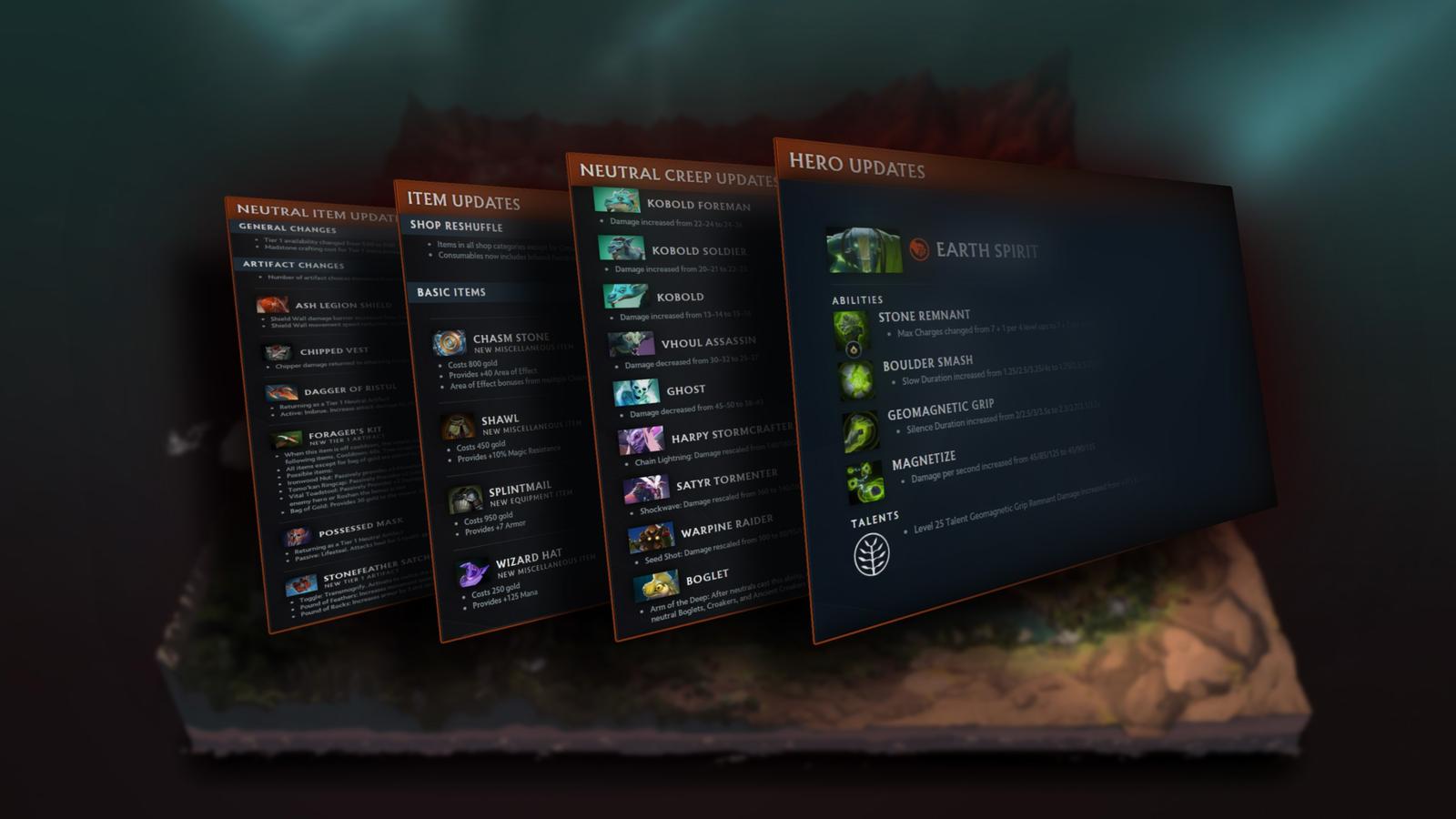
Within the Dota 2 community, the discourse has settled into the view that the map is too big, games take too long, and nobody can close anything out. They are all valid points, but there might be more to it than all just deriving from enlarging the map. TI12, 13 and 14 have all been played on the same bigger map. Something else changed between 2023 and 2026, and that might be what caused the rather stale meta of TI15.
TI 2026 (TI15) strategies revolved around tempo, fast map control and early and constant team fights. That translated into a handful of heroes becoming the centrepiece of almost every draft. The drafts were built around survivability, disruption, and map control. Yet, we also witnessed plenty of 40+-minute slugfests, where massive gold leads felt almost meaningless when it came to breaking high ground.
That suggests that a big networth advantage does not lead to ending the game as cleanly as it used to. Over the years, the game has added too many tools for the defending team to find value, making the high ground push a risk that often isn't worth taking.
The "suffocation" problem: Objectives vs networth
The core issue isn't that the map is too big; it's that controlling the map doesn't guarantee you can end the game. Why risk a high ground siege when you can just farm the map until you have a 30k lead? This led to the “boring”, "correct" playstyle we saw from teams like Falcons at TI 2026.
The high ground is where it actually feels like the game is breaking.
Walking uphill into the one spot on the map where all five enemies are waiting, with Glyph, buybacks, and whatever spells that excel at defense they have, is all too hard.
The Team Falcons vs Team Liquid series in the first lower bracket round, and especially Game 1 of that, where Falcons closed the game with an 80k gold lead, is an extreme example from TI15. The OG vs Nigma series from the group stage, and especially game two, where OG had map control, multiple Aegises claimed, and Nigma genuinely strangled in their base, but still couldn’t turn their lead into a successful high ground push is another example.
But not all games were like that; teams that got far enough ahead could still just end the game. So the answer isn't "high ground is impossible" either. It's more that suffocation now takes longer to grant the win, and if your draft doesn't naturally convert a lead into fast objective pressure, the defending team gets far more chances to slowly grind themselves back into the game: a wave here, two camps there, one more item, one more buyback.
So, there is clearly an issue with net worth converting into actual objectives.
Perhaps some solutions could revolve around:
- Nerfing the Glyph of Fortification through either the charges or cooldown.
- Rebalance creep bounty gold against kill gold: If a team with 40 more last hits than their opponent is sitting at the same networth as a team with 7 more kills, something is off. Kills should mean more than they currently do relative to passive farm.
Hero and item balance
The heroes that actually mattered this TI were mid-game tempo controllers like Keeper of the Light, Earth Spirit, Bounty Hunter, Centaur Warrunner, Winter Wyvern, Undying. Saves, disruption, initiation, counter-vision, mobility. Heroes that are good at being somewhere they shouldn't be able to be on the map.
Meanwhile, BKB-dependent cores are stuck in a bind. They can’t really play the game without BKB, but getting it, and then getting a second big item like Satanic or Eye of Skadi, eats the whole early game. By the time they are actually in position to do something with their debuff-immunity window, they are running into a Shiva's, a save, a Winter Wyvern who Glimmers and Cold Embraces your target or an Undying who saves it with the Tomb.
This is perhaps where the CDR conversation starts. If a fight ends in six seconds, nobody cares that some cooldown went from 12 to 9. But if the fight is still going 20 seconds later, that cooldown has probably come back around and "one more spell" in a drawn-out fight means one more stun, one more save, one more heal. This made the hero choices revolve around short cooldown disable power.
Some solutions can probably be found in nerfing both Satanic and Octarine or tinkering with the short cooldown lockdown and healing spells.
It’s not by coincidence that quite a few green heroes dictated the drafts at The International this year. Necrophos has become an offlane staple with 59% win rate, as in a teamfight-oriented meta, his sustain and scaling are simply too good. The meta is stale. While we saw a diverse pool, the top of the mountain was occupied by a select few heroes who were either too good at surviving or too good at stopping the enemy from playing.
It is a rather shocking statistic that 23 heroes were completely ignored by pro teams at TI 2026. This list includes icons of the game: Anti-Mage, Ursa, Wraith King, Medusa, and Kunkka. Others were present in almost every draft.
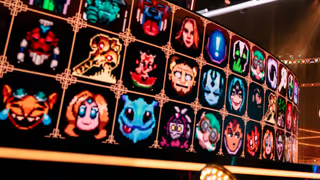
Awaited nerfs
image from Dark Carnival comic
- Treant Protector: His early game healing and armor aura are simply oppressive. He was picked or banned in all 148 games of The International 2026.
- Hoodwink: Sitting at the top of most-picked heroes and fourth in the most banned ones, her utility and pick-off potential are too high. Range or cooldown adjustments to her spells would be welcome.
- Earth Spirit: He has evolved into an unkillable midlane machine. His absurdly short cooldowns and late-game Magnetize talents (especially with Refresher) are simply too much.
Nobody wants to go back to a meta where one lost fight at 25 minutes means the base is gone. But we would also want to move away from a meta where a 20k gold lead is just a stat. Here's hoping that the post-TI 2026 patch finds that perfect balance.