What does Dota lose without LANs?

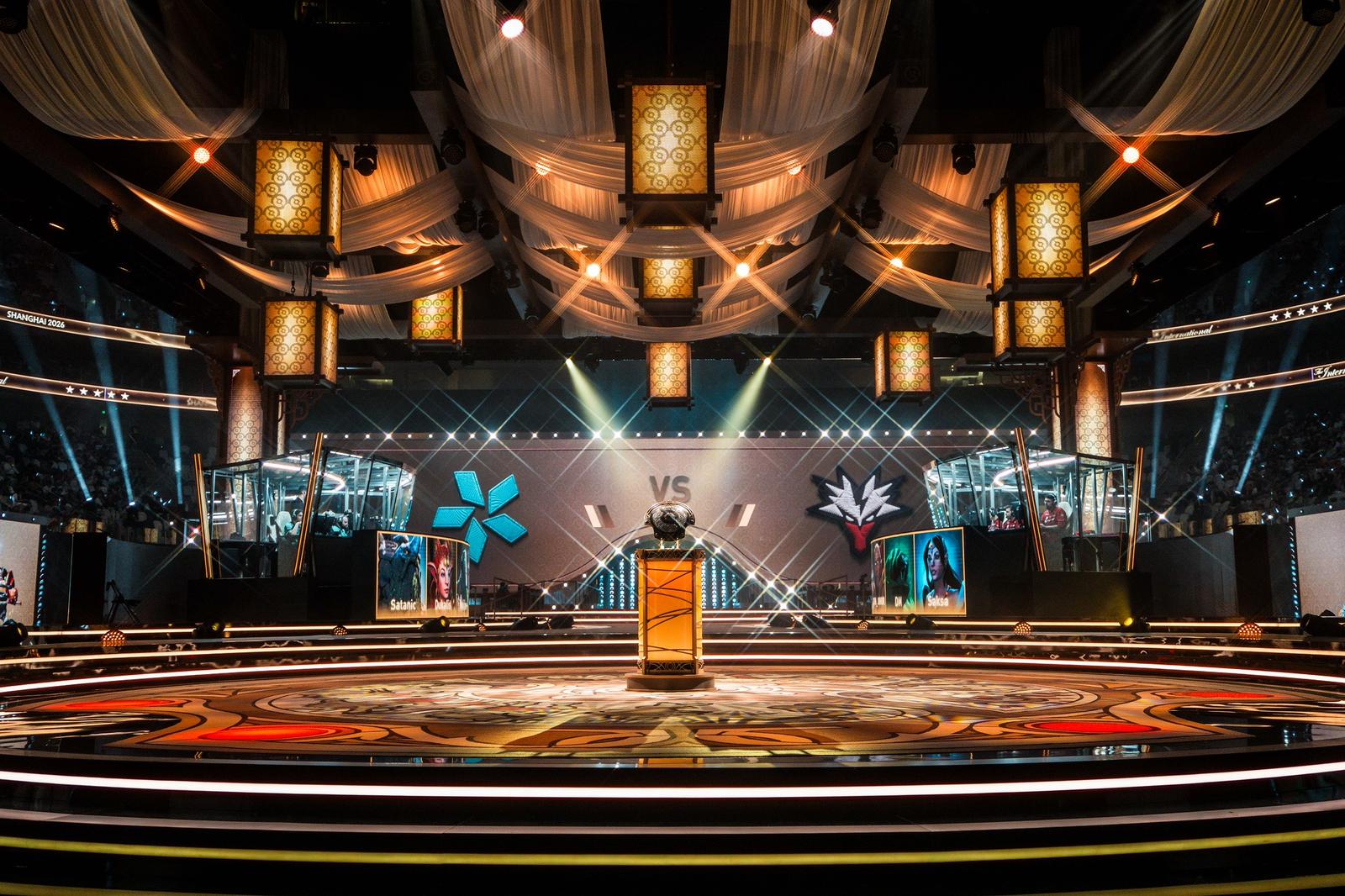
There is something unmistakable about a crowd realizing what is happening before the moment has fully unfolded.
The noise starts somewhere in the arena and spreads. Maybe it is that a smoke breaks, someone is caught out of position, or a teamfight turns. The casters rise with it, the players might hear it through their headsets—but possibly even feel the energy more— and thousands of people seem to understand at once that the game they have been watching for the last 40 minutes has suddenly changed.
Amazingly, at home, you feel it too.
Most Dota fans will never attend the majority of the tournaments they watch or never sit inside the arena, make a sign, meet a player or join the roar after an unbelievable play. Yet the presence of those who do stretches far beyond the people sitting in the seats.
Which raises an interesting question after another season filled with mostly online tournaments, studio events and only a handful of major events with significant live audiences.
What does Dota actually lose when the LAN disappears?
More than a crowd
There is an obvious answer for the fans able to attend. A LAN is an experience in a way watching from home simply cannot be. There are the games, but there are also the players you see, the signs, chants, booths and everything happening between matches.
More importantly, LANs have always been one of the places where an online community becomes a physical one. They are where you make new friends and finally meet people you may have played with, talked to or watched Dota alongside for years without ever being in the same room. For others, they are reunions, a reason for old friends scattered across countries and time zones to find their way back to one another.
The less obvious answer concerns everyone who stayed home.
Years ago, when Dota finally returned to LAN after the pandemic but spectators had not, we wondered how much the absence of an audience affected not just how an event looked on screen, but the competition itself. Players across esports and traditional sports have long talked about feeding off crowds, thriving under pressure or finding another level when playing in front of thousands of people.
If that is true, then the crowd isn't simply decoration around the game, it is another variable within it.
Some players rise on stage, some shrink, some seem almost built for the pressure of an arena, while others play their best Dota without thousands of eyes bearing down on them. Home crowds can rally behind one team and turn against another. Momentum suddenly has a sound.
Remove all of that and perhaps the Dota becomes cleaner. Players don't have the same stage nerves or environmental distractions. There is less travel, less jet lag and more familiarity. But cleaner does not necessarily mean more competitive.
Part of being the best player in the world has always been proving it under the brightest lights, with the pressure of an elimination game and thousands of people reacting to every decision. The ability to perform in that environment is itself a competitive skill.
When that element disappears, the viewer at home loses it too.
We aren't only missing the sound of the crowd. We may be watching a slightly different version of competition.
An event or a broadcast?
But there is another loss that is harder to quantify. And that is tournament identity.
When one online event ends and another begins days later, eventually they can start to blur together. The teams are largely the same. The players are sitting in similar rooms (most likely the exact same bootcamp room in fact), the broadcast moves from draft to game to panel and back again.
The Dota continues, but maybe only the logo in the corner changes.
That isn't inherently bad. Ultimately, we tune in because we want to watch Dota, and a great series can be a great series whether it takes place in an arena, a studio or someone's bedroom. But tournaments used to have a remarkable ability to become places.
Beyond the Summit was perhaps the best example of why an arena isn't even necessary to accomplish that. The Summit became one of Dota's most beloved tournament series without thousands of spectators sitting in stands. Players lounged on couches, wandered into broadcasts, played Mafia late into the night and interacted in ways fans rarely saw elsewhere. BTS built an environment around the competition, connecting the professional scene with the community watching from home.
You weren't simply watching matches. You were visiting the Summit.
WePlay understood something similar from another direction. Its tournaments became elaborate productions built around themes, sets, costumes and storytelling. The company once described its philosophy with a wonderfully simple idea: "You have to change the game, not the prize pool."
Perhaps Dota doesn't need every tournament to be a LAN with a packed arena. Perhaps it needs tournaments to feel like events.
Too much Dota?
There is, of course, a reason online tournaments are attractive.
LANs are expensive and complicated. Players need visas and flights, organizers need venues, hotels, production crews, and equipment. And travel days have to exist somewhere on the calendar.
Move competition online and many of those obstacles disappear and suddenly there is room for more Dota. And there is a lot of Dota.
The current ecosystem is largely driven by independent tournament organizers, each understandably trying to build its own circuit and secure the world's best teams. The result has been stretches of overlapping qualifiers, simultaneous tournaments and events beginning almost immediately after another ends.
We have already seen what happens when that becomes excessive. Last October, some South American teams faced as many as 28 competitive games across three days as qualifiers collided. This season, teams have competed in LAN and online tournaments simultaneously, squeezing official matches from another competition around their main event schedule.
Online tournaments aren't solely responsible for the congestion —far from it. But their flexibility makes filling another week considerably easier.
And there is an uncomfortable possibility buried inside that convenience. More Dota may make individual Dota tournaments matter less.
We saw a version of that with BLAST Slam VII earlier this year. It had elite teams, a substantial prize pool and competitive games, yet its place between the announcement of TI invites and the beginning of qualifiers left the tournament feeling strangely detached from the wider season.
Sometimes timing matters as much as the tournament itself. When an event ends Sunday and another begins almost immediately, there is little opportunity to miss professional Dota, anticipate its return or even properly digest what just happened. The calendar loses its punctuation.
No room to breathe
For players, there is another contradiction.
Removing LANs can reduce some of the most exhausting parts of professional competition. International travel is not glamorous when you do it constantly. Airports, visas, jet lag, hotels, bootcamps and weeks away from home take a toll.
An online event can spare players all of that. But reducing the burden of an individual tournament doesn't necessarily reduce the burden of the season.
Instead, the absence of travel can become another opening on the calendar. Finish one event. Queue for another.
The same issue appeared immediately after TI this year. Qualifiers resumed within days of the Grand Final, and PGL Wallachia Season 9 begins less than four weeks after Team Spirit lifted the Aegis in Shanghai. Two days after Wallachia ends, BLAST Slam VIII begins.

BLAST has already responded to the crowded end-of-year schedule by moving Slam IX entirely online, specifically reducing travel demands on teams.
That is a reasonable solution to a real problem but it also illustrates the strange cycle Dota has created for itself.
The calendar is crowded, so an event goes online to reduce the burden of the calendar. Going online makes it easier for the event to fit into the crowded calendar.
At some point, perhaps the question shouldn't be how efficiently we can fit everything in. But instead it should be whether everything needs to fit.
Something worth remembering
There is one final thing crowds and distinctive events provide that doesn't appear in prize pools, rankings or viewership graphs.
Memory.
Think back over years of watching Dota and the moments that remain aren't always simply who won which tournament.
It is the sound when something impossible happened.
A player walking onto a stage in front of their home crowd. An arena slowly realizing an upset was coming. A ridiculous segment from the Summit house. A strange set, a memorable interview, a player lifting a trophy while confetti falls and thousands of people are still screaming.
Those things turn matches into moments and tournaments into places we remember having visited, even when we were thousands of kilometers away.
Online Dota has an important place in the ecosystem. It gives more teams opportunities to compete, lowers costs for organizers, reduces travel and can fill competitive gaps that would otherwise remain empty. The answer cannot simply be turning every tournament into a three-week international LAN with an arena audience.
Dota doesn't necessarily need more tournaments, It may not even simply need more LANs. Maybe it just needs more occasions. Because there is a difference between having another week of professional Dota to watch and feeling like something is happening that you don't want to miss.