They call them Pocket: The Dota 2 hero hidden in Deadlock

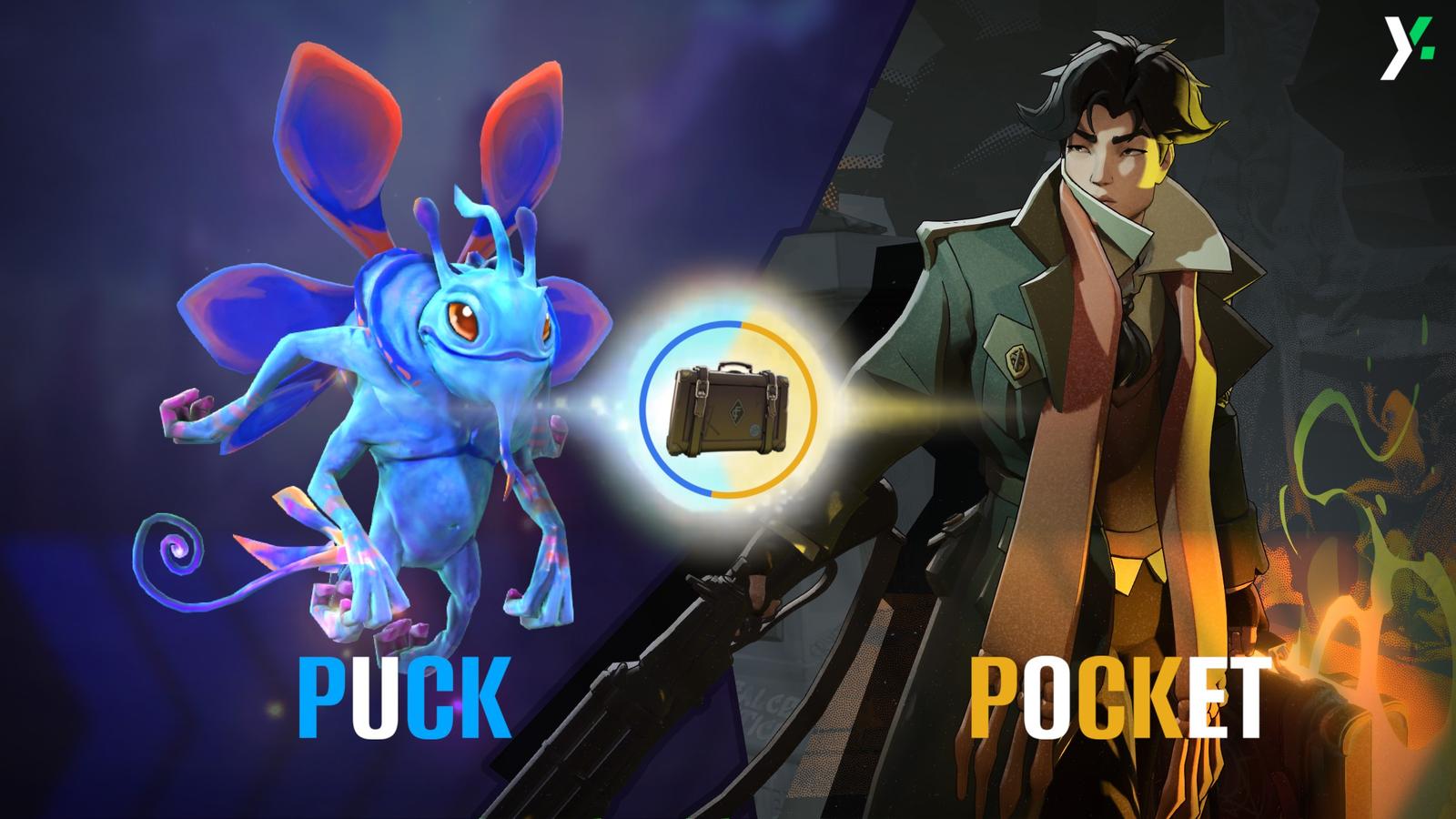
Throw something forward, teleport to it, and disappear for a moment when the enemy tries to hit you. If you've played Puck, Pocket is one of the easier Deadlock heroes to recognise. Pocket just throws a cloak instead of a shiny orb and hides in a briefcase instead of phasing out (Pocket doesn't seem to have that same Faerie Dragon magic). Oh, and there's a shotgun. Some members of the Deadlock community just call them Puck.
If you haven't played it, Deadlock is Valve's third-person shooter MOBA. Lanes and items will feel familiar, though the creeps are called troopers and Souls work as both your gold and your experience. Every hero also carries a gun and a few bars of stamina for dashing around, including once in midair.
Puck is a Faerie Dragon that lives for millennia, a merry prankster who likes to confuse and trick everyone around it, both in the lore and in game, where enemies spend a lot of time trying to chase it down. Pocket is Arin Fairfax, an heir to a corporate fortune who's been hiding since someone tried to kill them on their eighteenth birthday. Seems like both are quite a pain to catch either way.
There's a sprinkle of Warcraft III history here as well. The Night Elf Faerie Dragon had Phase Shift on auto cast, disappearing after taking a hit so follow-up attacks and spells could miss. That defensive trick eventually became one of Puck's signature abilities, with the player handling the timing these days, and Deadlock seems to be going for a familiar version with Pocket's Enchanter's Satchel.
Orbs and Cloaks
Puck's Illusory Orb is the obvious match for Pocket's Flying Cloak. Both fly forward, damaging enemies in their path, and both give you somewhere to teleport. Puck needs a separate skill for that last part, Ethereal Jaunt, while Pocket just presses the Cloak key again. Either way, you have to account for two positions at once: where the hero is standing and where they might suddenly teleport to. That gives both heroes room to play aggressive or defensive off the same cast, and if your team doesn't have a strong catch, they can force you into specific itemisation just to deal with them.
Phase Shift and Enchanter's Satchel are just as recognisable. Puck enters a phased state that lets it dodge damage and disjoint spells, and with its current innate, Puckish, it even regenerates health and mana for the dodges. Phase Shift can go off the rails with Aghanim's Shard, which makes Puck attack every enemy in range each time it shifts, so it offers some build variety and can shell out serious damage from a hero nobody can touch.
Pocket's Satchel works in a similar fashion. Pocket hides in the suitcase to avoid damage, then deals spirit damage (Deadlock's version of magic damage) to nearby enemies when they pop out, and they can pop out early to pick the moment. One thing that's different is how Pocket can chain these spells together. Cast the Cloak, hide in the Satchel, then teleport to the Cloak from inside the suitcase, and the Satchel's burst damage goes off when Pocket arrives. Puck can Phase Shift and then Jaunt to its Orb too, but Jaunt doesn't drop any damage on its own, so this is where the two heroes begin to diverge.
Barrage: imagine Puck with this damage amp
This is probably the most fun part with Pocket. Their first ability (the Q slot, if we're talking default Dota 2 hotkeys) is Barrage, a short channel that fires four projectiles. Every projectile that hits a hero gives Pocket a stack of damage amplification for 15 seconds. At the base 6% per hit, landing all four gets you 24%, and when the spell is fully upgraded that amplification goes up to 40%. The buff applies to Pocket rather than being tied to the hero's Barrage hit, so it boosts any damage Pocket deals afterward, including to troopers and neutral camps.
This is what makes Pocket arguably nastier and more burst-focused than Puck. You amp yourself up by landing Barrage on enemy heroes, throw the Cloak and Satchel combo on top of them, and finish with the shotgun for an insane amount of damage.
It's not a guaranteed combo by any means, though. Puck can get punished for a bad Orb or Jaunt, and Pocket can fall victim to the same thing. Deadlock adds its own catch, too. Waning Rift doesn't care what's standing between Puck and the target, but Barrage and the Satchel's burst need line of sight.
Say Pocket lands Barrage, throws the Cloak past an isolated hero, hides in the Satchel and teleports out on top of them. If that hero dashes behind a pillar before Pocket pops out, the burst hits the pillar and the shotgun doesn't finish the job. Now Pocket is standing where the Cloak was, with Cloak and Satchel both on cooldown and a couple of stamina dashes to get out on.
Pocket has a Venomancer ult (Nasty stuff!)
Pocket's ultimate, Affliction, is another Dota connection. It applies nonlethal damage over time to every nearby enemy in line of sight, much like Venomancer's former Poison Nova, and its max-level upgrade stops affected heroes from healing at all, which is a major pain. Affliction can't kill a hero on its own, but it's just as annoying and sets up kills the same way the old Veno ult did.
Puck's Dream Coil works differently, because it holds people in place. Enemies have to decide whether to break the tether and eat the stun and magic damage (or BKB out of it), or stay within the tether and still try to win the fight where Puck wants it. Affliction holds nobody. Now imagine that nasty little dragon spewing a wave of poison at you, then teleporting away or using other spells to finish the job. It's quite gross.
Keep an eye on that Cloak
The Cloak isn't only for getting in. It flies for about four seconds, so you can throw it ahead of time and only decide whether to teleport once you see how things play out. The same cast that threatens a kill can be your way out.
It can do that when nobody's fighting, too. In a Reddit thread about farming jungle on Pocket, one player describes throwing the Cloak through a neutral camp toward safety, clearing the camp, then teleporting to the spot they'd already picked. That's one player's routine, so don't take it as gospel for how every high-ranked Pocket plays.
Puck players should recognise the thinking, since Orb has been handling wave clear, dangerous farm and rotations for years. Orb just comes back much sooner. It's on a 9 to 12 second cooldown depending on level, while the Cloak sits at 26 seconds before upgrades and items, so every Cloak spent on a camp is an escape Pocket goes without for a lot longer.
If you're coming from Dota, Puck gives you a familiar starting point, even if aiming and managing stamina in third person takes some getting used to. The longer-to-learn decision is where you place the Cloak before a fight starts. Throw it at the enemy, and you've picked your way in. Throw it behind you, and you've picked your way out. Either way, you won't get another one for a while.
Whether you're a Dota 2 veteran looking for a familiar entry point into Deadlock or a newcomer curious about the heroes that inspired Valve's latest cast, Pocket offers a compelling bridge between the two games. The shotgun may be new, and the third-person aiming takes practice, but the core philosophy remains: be slippery, be unpredictable, and always have an escape plan. Puck would approve.


