When the house always plays: Esports' uncomfortable tournament ties

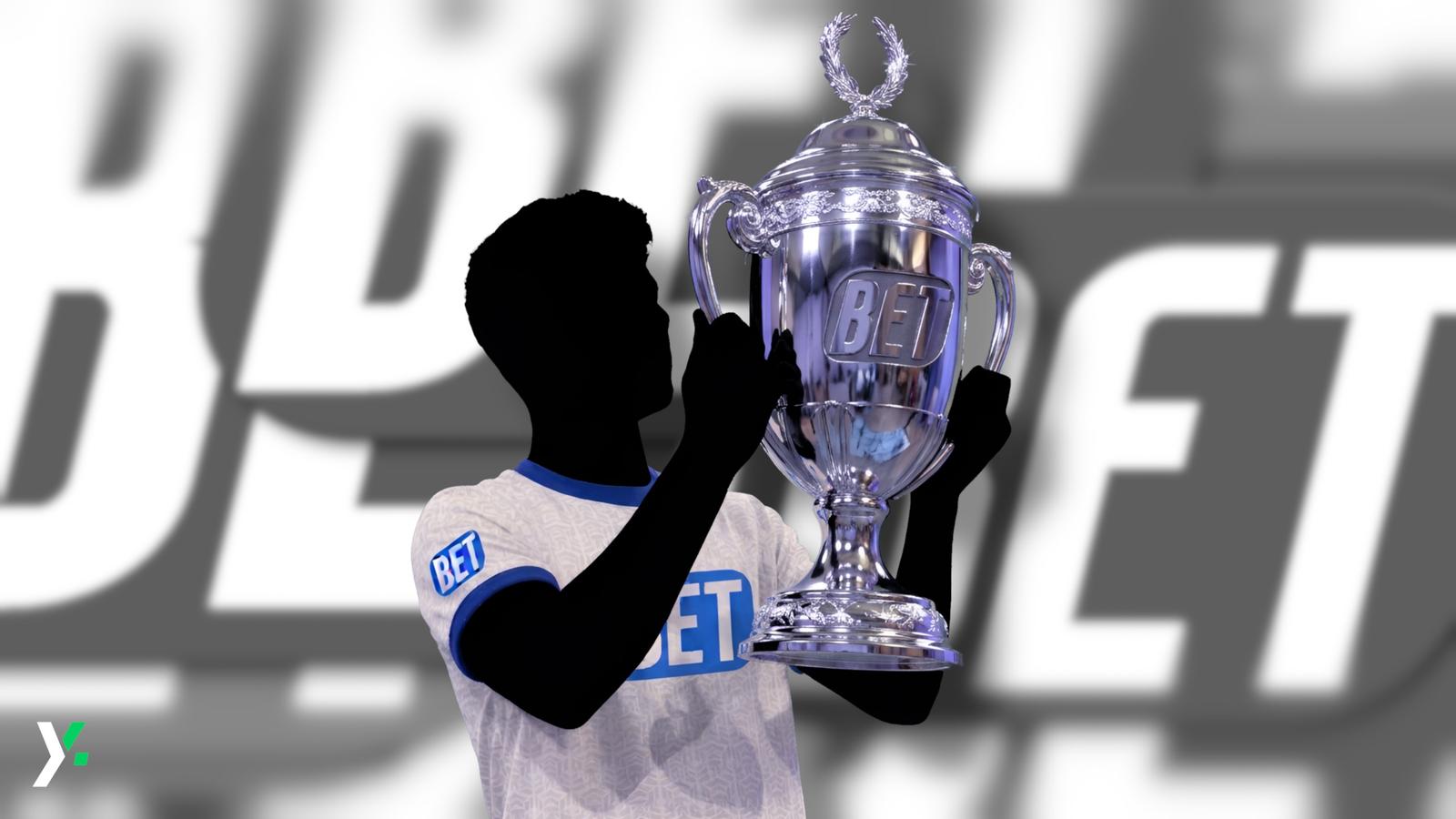
On November 12, 1win Essence III will begin its main stage, bringing together twelve Dota 2 teams competing for a $200,000 prize pool. Among the eight teams receiving direct invitations is 1win Team, the roster carrying the name of the tournament's title sponsor.
Less than two weeks ago, PARI Universe by FISSURE concluded its $250,000 tournament, featuring PARIVISION among its invited participants. BetBoom Team and 1win also competed, continuing a familiar pattern in which betting-branded organizations participate in events associated with companies that also maintain professional Dota 2 teams.
None of this is particularly unusual anymore. Betting companies have become deeply embedded in esports, financing teams, sponsoring broadcasts and supporting tournaments in an industry where sustainable revenue remains elusive.
Yet the increasingly familiar sight of a team competing in an event bearing its sponsor's name raises an uncomfortable question: Who ensures competitive independence when the commercial interests behind a tournament are also represented among its participants?
The concern is not necessarily match-fixing, manipulated results or deliberate favoritism. There is no evidence presented here that any of the named tournaments have engaged in such conduct. Rather, these relationships create potential conflicts of interest, often without clear public explanations of how those conflicts are managed.
And competitive conditions are determined long before players enter a lobby.
The advantages that never appear on the scoreboard
When competitive integrity is discussed in esports, attention generally gravitates toward cheating, match-fixing and other direct attempts to manipulate results. Conflicts of interest are less tangible because they do not require an improper decision, or even an improper result, to exist.
Consider tournament invitations. At 1win Essence III, eight teams received direct invitations while ten others entered a play-in competition for the remaining four places. At PARI Universe, nine of the ten main-event places were allocated through invitations, with just one available through qualification.
Invitations are a legitimate part of professional Dota 2. Organizers consider competitive strength, audience interest, regional representation and commercial appeal when assembling tournament fields. A team may be an obvious candidate regardless of its sponsors.
But when an invited team shares a commercial identity with the tournament, the selection process warrants scrutiny. Who establishes the criteria? Are they published? Can commercial partners influence the field, or are decisions made independently?
Similar questions surround seeding and group allocation. A blind draw may be entirely fair, but can participants verify its independence? Are seeds determined through published rankings, or does the organizer retain discretion over potentially advantageous placements?
Scheduling introduces another dimension. Match times determine rest between series, preparation windows and whether players compete during their usual practice hours. In international online tournaments, time zones can make these differences particularly significant.
There are also commercial advantages unrelated to winning. Favorable broadcast slots, featured matches and promotional prominence can increase a team's visibility and sponsor exposure. When the tournament's title sponsor is also represented by a competing team, the distinction between promoting the event and promoting that participant becomes less clear.
None of these decisions necessarily constitutes wrongdoing. Organizers must make them regardless of who participates. But overlapping commercial interests make it more important to demonstrate that those decisions are fair.
When the betting company has a seat on both sides
Betting operators introduce additional considerations because their businesses are commercially connected to competitive outcomes.
Betting markets respond to results, roster developments and other information that may influence how a match unfolds. This does not mean a betting company sponsoring both a tournament and a team is manipulating those markets. It does, however, raise questions about information access, internal safeguards and operational independence.
Who can access sensitive tournament communications? What separation exists between tournament operations, team management and betting-related activities? Who independently monitors potential integrity concerns?
Importantly, sponsorship and operational control are not interchangeable.
1win Essence III is organized by BASED Esports, while PARI Universe is organized by FISSURE. A betting company funding or naming an event does not automatically administer its brackets, select participants or resolve disputes. Separate tournament operators may provide meaningful safeguards.
But separation on paper is only part of the equation. What matters is whether competitive decisions are genuinely independent and whether participants have sufficient information to assess that independence.
Counter-Strike has already confronted the question
Perhaps the most revealing comparison comes from another Valve esport.
In February 2026, BC.Game Esports was barred from participating in BC Game Masters, a Counter-Strike 2 tournament carrying the same betting brand as the team.
Although BC.Game emphasized that the team and tournament were operated by separate entities, Valve took a firmer position. In comments reported by HLTV, a Valve representative explained that the publisher did not distinguish between a team's title sponsor and its ownership when evaluating such conflicts.
Valve stated that it would not accept a team's title sponsor or brand also sponsoring a tournament in which that team competed, even at a smaller sponsorship level. However, a tournament sponsor appearing less prominently on a participating team's jersey could be acceptable.
Separate legal entities were not considered sufficient to eliminate the conflict created by a shared title sponsor.
Counter-Strike's tournament requirements also address business relationships between organizers and participants, including ownership, management and financial connections, with provisions for approval and disclosure.
These rules operate within Counter-Strike's specific competitive framework and cannot automatically be applied to independently organized Dota 2 tournaments.
Nevertheless, the underlying concern is strikingly similar.
Valve has already recognized in one of its competitive titles that a shared commercial identity between a tournament and participating team can compromise the independence expected of professional competition.
Why, then, should arrangements considered unacceptable in Counter-Strike be treated as routine in Dota 2?
There may be differences in tournament regulations and qualification systems that explain the discrepancy. But those differences deserve examination, particularly as Dota 2 continues to rely heavily on third-party organizers and commercially funded events.
Beyond betting: the wider question of influence
The issue extends beyond gambling companies.
Esports has increasingly developed around commercial networks whose interests span team ownership, sponsorship, tournament production, broadcasting and qualification systems.
The relationship between ESL's competitive circuit and the Esports World Cup offers another reason to examine how these interests intersect. ESL Pro Tour standings have provided qualification pathways to the Saudi-hosted event, while Team Falcons, a Saudi esports organization, competes within the same broader ecosystem.
This is not equivalent to a betting operator sponsoring a tournament and a team carrying its name. Shared national investment, commercial relationships and common ownership are distinct matters. Nor does Falcons' participation or success establish preferential treatment.
But the broader question remains: how independently are competitive pathways administered when the organizations financing, promoting and participating in esports operate within overlapping commercial environments?
A team can be entirely deserving of its invitation or qualification while competing within a structure whose independence merits scrutiny. Competitive legitimacy and institutional conflicts of interest are not mutually exclusive.
Transparency is not the same as independence
It is tempting to suggest that disclosure resolves the problem. If everyone knows a betting company sponsors both a tournament and a participating team, then the relationship is hardly secret. But disclosure establishes only that a connection exists. It does not explain how that connection is managed.
An organizer could openly acknowledge its commercial relationships while leaving invitation criteria unpublished, group draws unverified, scheduling decisions unexplained and administrative appeals entirely under its control.
Conversely, an event with overlapping sponsorships could implement independently administered draws, documented seeding criteria, standardized scheduling procedures and impartial dispute resolution.
This is important in an industry without a single governing body overseeing all professional competition. Publishers establish some requirements, organizers implement their own regulations and integrity organizations provide varying degrees of oversight.
Consequently, the standards governing conflicts of interest can differ substantially between games and tournaments, even when the underlying concerns are similar.
Who is responsible for protecting the competition?
There is a practical reality esports cannot ignore. Betting companies provide significant funding to an industry that has repeatedly struggled with financial sustainability. Removing those sponsors without alternative investment would carry consequences for organizers, teams and players. Nor should every commercial connection automatically disqualify a participant. There is a meaningful difference between purchasing advertising space and exercising influence over competitive administration.
But financial dependence should not make legitimate governance questions untouchable.
The recent sequence of PARI Universe and 1win Essence, alongside the longer history of BetBoom-branded tournaments, illustrates how familiar these arrangements have become in Dota 2. Counter-Strike's handling of BC.Game demonstrates that a publisher can draw a much firmer line.
The question is not whether these teams deserve to compete. It is whether the structures governing their competitions provide sufficient assurance that commercial relationships cannot influence the conditions under which they do so. There is no reason to presume a tournament is unfair simply because its sponsor also backs a participating team. But neither should the industry expect that relationship to be accepted without scrutiny.
Competitive integrity begins before the first draft, with the invitations, brackets, schedules, rules and people entrusted with administering them.
And when the house is also playing, the responsibility to demonstrate that the game is fair becomes all the more important.


