Proving grounds: Academy teams are a critical but dying project and NAVI Junior's exit means one less

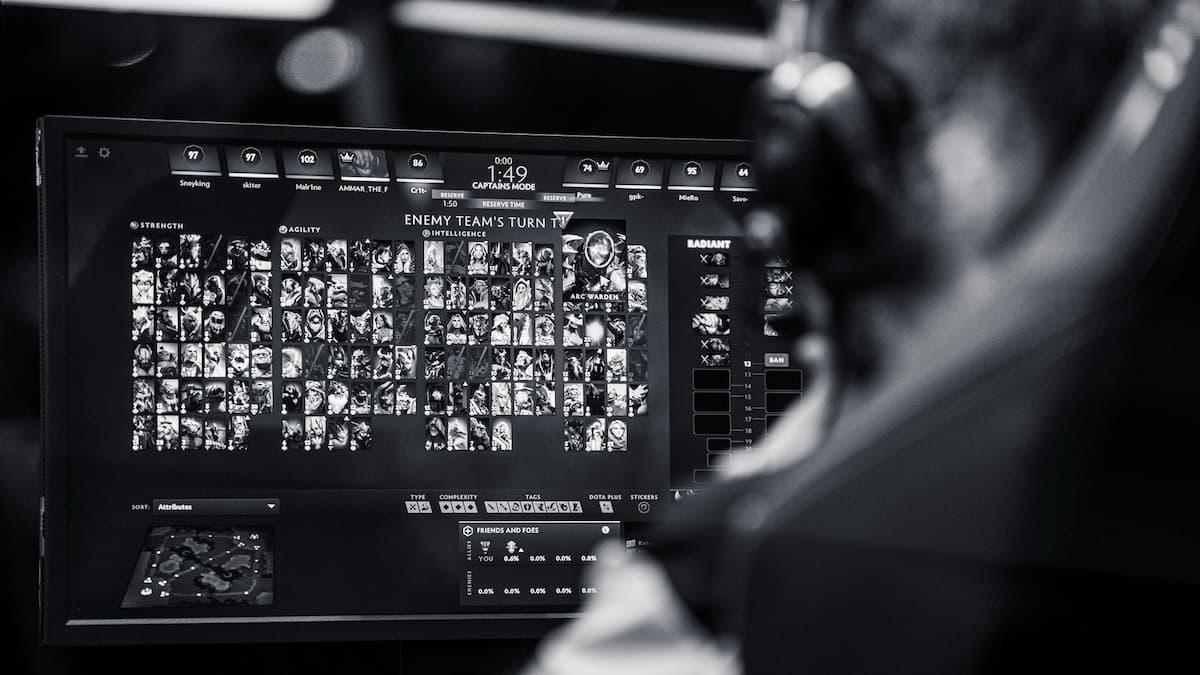
NAVI quietly announced the disbandment of their Junior Dota 2 squad — a small tragedy to anyone paying close attention to how this game's talent pipeline often works. It was the latest casualty in a long, slow decline of one of an undervalued institution: the academy team.
The concept was for young players being given time, structure, and the professional environment to grow before the world demanded they be great. China understood this ages ago, building farm systems out of campus housing and inhouse leagues that produced generation after generation of elite talent. The CIS region — and largely only the CIS region — took notes, and in doing so built the pipeline that gave us two Team Spirit TI victories and a VP.Prodigy squad that went from youth project to TI finalists in a single season.
Today, a handful of CIS organizations are still running these projects — Team Spirit Academy, VP.Prodigy, Yellow Submarine — holding the idea alive almost entirely on their own. NAVI Junior was supposed to be proof that the model could keep working. Instead, it's another reminder of just how fragile the whole thing has always been.
History of academy, junior, youth squads in Dota 2
China's legacy
Long before the rest of the world began debating how to develop young Dota 2 talent, China had already built the infrastructure to do it. It was deliberate, structured, and modeled on something that had worked for decades in traditional sports.
ViCi Gaming had a large sports campus in Shanghai, housing multiple main and secondary teams, coaches, staff, media and management under one roof. The model was to acquire youth players' contracts and rights when they were young and still looking for basic support to pursue their dreams — and then, once some of these young players grew, their contracts were already owned by the big org, so they could be sold for large fees or promoted cheaply. This was the Chinese esports model. It was, functionally, what European football clubs have been doing for over a century.
LGD had youth teams for a long time, and so did ViCi, with the bulk of their current top players coming from their farm system. For LGD, that included Wang "Ame" Chunyu and Lu "Somnus" Yao from CDEC. For ViCi, players like Zhou "Yang" Haiyang, Xiong "Pyw" Jiahan, Ding "Dy" Cong, and Pan "Frisk/fade" Yi all spent time in their youth system.
Look at the Liquipedia category for Chinese Dota 2 teams and what you see is a layered ecosystem of main teams, sister squads, youth rosters, and feeder teams that operated simultaneously — especially EHOME.
But the name that crystallized the model's potential was CDEC. In April 2014, LGD Gaming announced they would form a youth team called LGD.CDEC, named after the Chinese Dota Elite Community inhouse league, with the team largely consisting of young talent from that league. The team eventually broke off into its own entity, and what followed was one of the most historic underdog runs in TI history: a squad of unknowns — built around a teenaged Somnus/Maybe — making the grand finals at TI5 as a wildcard team, defeating LGD and nearly winning everything.
The Chinese model was never perfect — it depended heavily on deep-pocketed organizations, the inhouse league structure that fed it (the CDEC IHL itself eventually faded), and a broader ecosystem of streaming revenue and local sponsors that doesn't translate to other regions. Even at its peak, the pipeline was imperfect. But it existed — systematically, at scale, across multiple organizations at once.
And that is something no other region ever replicated.
CIS Region takes notes
If China was the blueprint, the CIS region was the only part of the world that ever looked at it seriously and attempted something comparable. And it produced results that are genuinely hard to argue with.
One of the first was Team Empire in 2018 with Empire.Hope— a junior roster under the Empire banner that eventually, in 2020, was promoted to become the main Team Empire squad.
But one of the most emblematic case is VP.Prodigy. Upon their creation in 2020, Virtus.pro's general manager stated explicitly that the team
allows young players to attain professional scene experience and knowledge without the enormous pressure of instant result expectation.
The goal wasn't immediate results, it was a controlled environment for development.
The VP.Prodigy roster consisted of Vitalie "Save-" Melnic and Egor "Nightfall" Grigorenko, who had previously played for Virtus.pro on a trial basis before playing for the academy squad, alongside Dmitry "DM" Dorokhin, Danil "gpk" Skutin, and Illias "illias" Ganeev. These weren't random signings, they were players VP had identified, tested at the top level, and then deliberately placed in a lower-pressure environment to mature.
In late 2020, VP's main roster was replaced entirely by the VP.Prodigy squad, leading to impressive results in the Dota Pro Circuit regional leagues in 2021. Virtus.pro were the only team in any region to finish 7-0 in both of their first two seasons. The prodigies had become the team and went to TI10.
That is the pipeline functioning as designed. The players who'd been groomed in VP.Prodigy didn't just graduate; they became Nightfall, gpk, and Save-, names that defined (and still do define) a generation of CIS Dota.
The CIS scene during the DPC era was full of these second-tier structures: small CIS stacks operating under org umbrellas, building experience through regional qualifiers while the main team competed above them.
Perhaps one of the most iconic cases, includes the direct throughline between Yellow Submarine and Team Spirit.
In December 2020, Team Spirit signed the Yellow Submarine roster — Illya "Yatoro" Mulyarchuk, Alexander "TORONTOTOKYO" Khertek , Magomed "Collapse" Khalilov, and Yaroslav "Miposhka" Naidenov — and what followed was The International wins in 2021 and 2023. But Yellow Submarine wasn't just a team Spirit happened to aquire or collaborate with. It had been functioning as an informal academy: a youth-oriented CIS squad where talent was collected and shaped until it was ready to be absorbed. Since 2023, the roster has been rebuilt twice around young, relatively-unknown talent. The first rebuild featured 15-year-old prodigy Alan "Satanic" Gallyamov, who along with teammate Aleksandr "rue" Filin were later signed by Team Spirit. The cycle kept turning.
When Denis "Larl" Sigitov needed a break, Yellow Submarine midlaner Marat "Mirele" Gazetdinov stepped in for Team Spirit temporarily. When Collapse stepped away, offlaner Bohdan "Batyuk" Batiuk from the current Yellow Submarine roster stepped up. While most teams recruit well-known and experienced players as stand-ins, Team Spirit consistently look within their own system.
The CIS region has not been doing this perfectly or consistently. But it has been doing it. That matters, because no one else has.
The rest of the world behind the curve
Western Europe had the resources and the organizations. It produced OG Seed, announced with Ceb's full backing and genuine intent, but it didn't last. It produced brief flashes of ambition from other orgs that quietly disappeared when sponsorship dried up or the regulatory pressure of Valve's one-team TI rule made formal academy structures legally awkward.
North America was, as former manager Jack "KBBQ" Chen observed and told this writer years ago, simply not prepared for this approach. It had too small a player base and too high a cost for infrastructure and support. NA Dota's pipeline problems have been documented at length and are by now less a problem to solve than an accepted feature of the landscape.
SEA has always operated differently — players emerge through the public MMR ladder and get recruited, rather than being developed inside organizational structures. The ladder is part of the culture and formal academies never took root the same way.
And so, globally, the map of who has sustained meaningful talent development infrastructure through the years collapses to: China, and to a lesser extent CIS. Only two regions. One of them is now geopolitically fractured and cut off from half the circuit's tier-one events. The other has been quietly dealing with its own declining investment.
NAVI Junior: A warning sign of the future?
Which brings us back to now.
NAVI Junior was an organization-funded, explicitly-branded second squad designed to develop players for the main roster. In 2025 it worked: the junior squad outperformed the main roster so consistently it was promoted wholesale to represent NAVI as its first team. Then a new NAVI Junior was assembled and it struggled. In European online tournaments they were unable to achieve the expected level of consistency — this became the key factor in the decision to disband. Only 15-year-old Oleksii "onLiTaL" Lytovka will remain with NAVI, given the opportunity to gain experience with other teams. One cycle of patience was all the org could afford.
But while NAVI pulled the plug, the CIS region still has teams doing this right now.
VP.Prodigy was revived in 2025 under a new roster, with a new squad formed in September 2025 — evidence that even the organizations who let these projects lapse eventually feel the pull to restart them. Team Spirit formalized their own side of it, announcing their first-ever official academy roster ahead of the 2026 season.
These academies are still grinding through lower-division qualifiers, still doing the quiet work of building the next generation.
Whether any of them produce the next Yatoro — or whether they quietly fold before anyone notices — probably depends less on talent than on how long the orgs behind them feel like footing the bill. Because it is always about the money... and the patience.