Dota 2 is seeing its highest player counts in a decade. Can it last?

Dota 2 is having one of its biggest years in a decade.
In August, the game averaged more than 617,000 concurrent players, its highest monthly average since October 2016.
For a game released more than 13 years ago, that alone is notable. But August was not an isolated spike around The International. Dota's average concurrent player count has been climbing for three consecutive months. After averaging 422,693 players in May, it rose to 466,002 in June, 545,528 in July and 617,078 in August.
That is an increase of almost 46 percent between May and August.
There is no way to draw a direct line from those numbers to any single update or event. Concurrent player data does not tell us why someone opened Dota, whether they are playing for the first time or returning after years away, or whether existing players are simply playing more often.
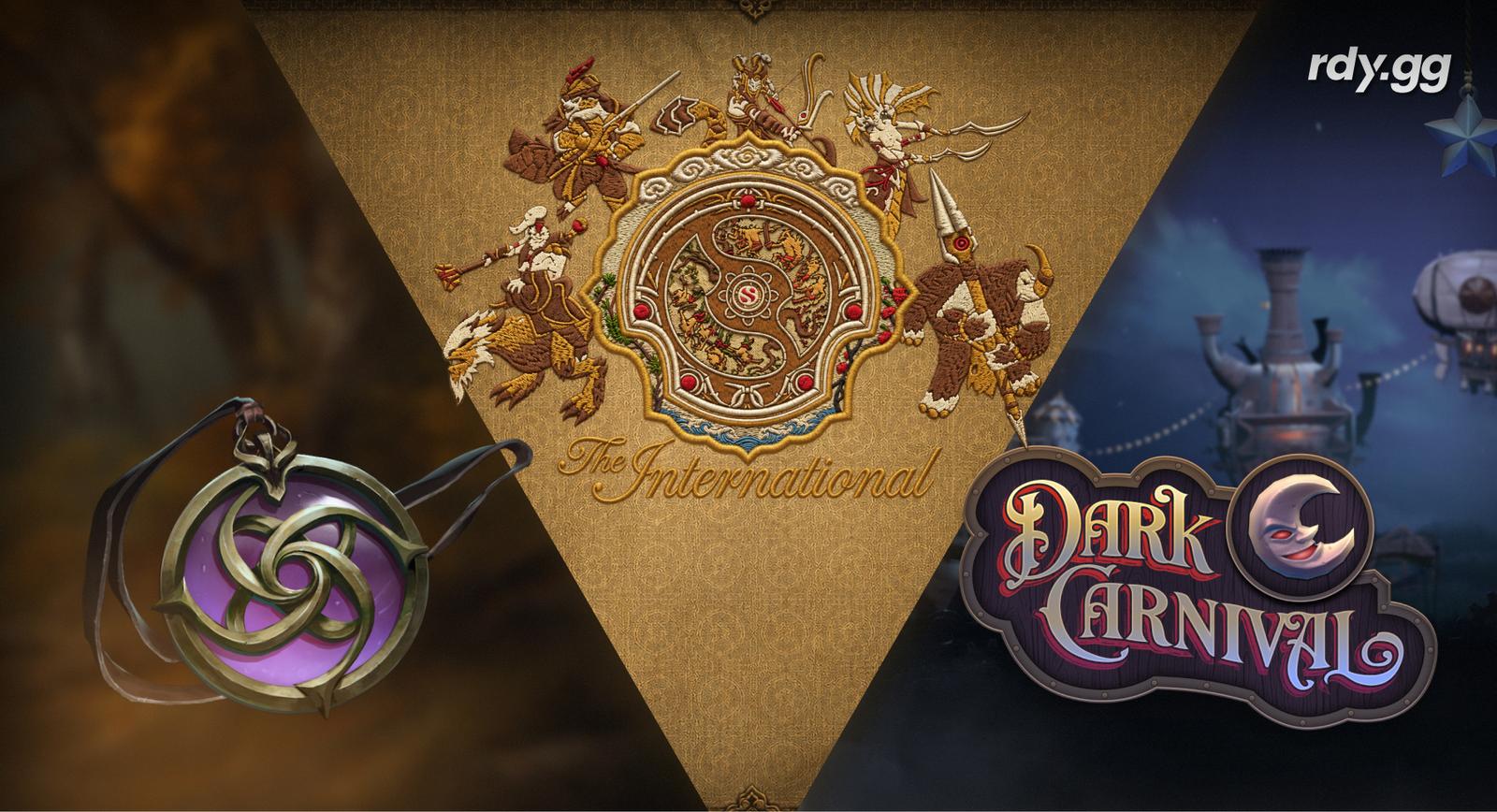
But the timing is difficult to ignore. Dota's summer has offered players a steady stream of reasons to keep opening the game, from free rewards and Dark Carnival to its biggest competitive event of the year.
Quartero's Curios
Quartero's Curios has given Dota another reason for players to keep logging in.
Valve introduced Quartero in 2025 with a refreshingly uncomplicated premise: play Dota and earn free cosmetics. There was no Battle Pass to purchase before beginning the reward track. Players earn Curio Levels through matches, with wins providing more progress than losses, and unlock cosmetics and seasonal rewards along the way.
The system has continued through successive seasons, including throughout the summer of 2026. It meant that even before Dota's biggest summer event arrived, Valve already had a low-friction reward loop encouraging players to keep queueing.
The system has continued through successive seasons, including throughout the summer of 2026. It meant that even before Dota's biggest summer event arrived, Valve already had a low-friction reward loop encouraging players to keep queueing.
The carnival comes to town
Dark Carnival arrived on June 25, introducing a new ongoing event in the Dota universe and the first part of Midnight Run, a fully voiced adventure following Legion Commander and Hoodwink through Ringmaster's prison train.
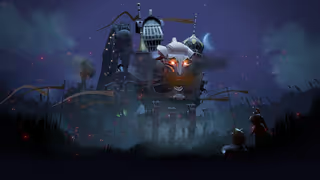

Alongside the story came an explorable map, five Automaton Personas, 20 new hero sets, Candyworks and other rewards, with some items earned by progressing through the event itself. More importantly, Dark Carnival gave players something to work toward outside the usual cycle of winning and losing matches.
The player numbers began moving at roughly the same time.
May had averaged 422,693 concurrent players. June jumped 10.25 percent to 466,002 despite Dark Carnival arriving with less than a week remaining in the month. July then climbed another 17.07 percent to 545,528, the largest month-on-month increase of the summer.
Valve also made a significant adjustment to Dark Carnival less than a week after its launch.
On July 1, Regular and Turbo games began awarding Scrap regardless of whether players won or lost. Regular matches award two Scrap and Turbo games one, while six can be traded for a Hero ticket of the player's choice. Seeing Stones could also be earned through Co-op Bot matches on Hard and Unfair difficulties.
On paper, it is a relatively simple reward system, but in practice it changes what counts as progress. Players do not necessarily have to win or climb the ranked ladder. They simply have to play Dota.
Welcome to The International
If Dark Carnival and Quartero gave players reasons to play Dota, The International gave them a reason to think about it again.
The International 2026 began in Shanghai on August 13, with the Main Event running from August 20 to 23 at the Oriental Sports Center. For ten days, professional Dota once again became the centre of the game's ecosystem.
Players can drift away from Dota without ever entirely leaving it behind. They may stop queueing regularly, but they still know the teams, recognize the players and understand exactly what they are watching when a game turns on one impossible fight.
TI has a way of drawing those players back into Dota's orbit. A clip becomes a series, a series becomes a conversation in an old group chat, and suddenly people who have not played together in months are talking about queueing again.
But there is also something about The International that makes Dota feel bigger than the game being played on screen. It is where impossible runs become history, where careers are defined and where, even after all these years, Dota can still make anything feel possible.
This year was no exception. Team Spirit's historic third Aegis offered another reminder of what the game can become at its very highest level, the kind of performance that does more than make people want to watch Dota. It makes them want to play it.

The numbers rose sharply around the tournament.
By August, Dota was averaging 617,078 concurrent players. Around the conclusion of The International on August 23, SteamDB recorded 1,003,965 players online following the Grand Final, the first time Dota had crossed one million concurrent players since October 2022.
The International did not create the summer's growth from nothing. By the time TI began, Dota had already climbed from an average of roughly 423,000 concurrent players in May to more than 545,000 in July. TI arrived in the middle of a resurgence already underway.
But bringing them back is one thing. Keeping them is another.
Even after The International ended, Dark Carnival remained, while Quartero's summer rewards continued beyond the tournament.
Players who returned because watching TI made them want to queue could find themselves progressing through Dark Carnival. Someone who had already returned for Midnight Run might become invested enough in Dota again to follow TI. Another player might simply keep playing because their next free cosmetic was within reach.
The systems do not need to serve exactly the same purpose to reinforce one another. While TI creates attention, Dark Carnival creates something to do with it. Ongoing reward systems give players another reason to come back tomorrow.
That potentially turns a spike into something more valuable: a bridge.
Whether it actually works is another question
Steam's concurrent player numbers cannot distinguish between new players, returning players and existing players playing more frequently or spending longer in the game. Nor can they tell us whether someone is queueing because they rediscovered their love for Dota or because there is a free set at the end of the road.
But perhaps that distinction matters less than it initially appears.
If someone who has not played Dota in six months comes back because they want a cosmetic and plays 20 matches to get it, Valve has already achieved something. For those 20 matches, that person is playing Dota again. They might reconnect with people they used to play with. They might rediscover a favourite hero, find a new one or simply remember why they accumulated thousands of hours in the game in the first place.
They might also collect their reward and disappear again. That is the gamble. The reward does not necessarily have to keep the player forever. It only has to give Dota the opportunity to do so. For a game as established as Dota, periodic reactivation may itself be a form of retention. The important question is how much of it survives when the immediate incentive disappears.
The next numbers matter more
Dota reaching one million concurrent players around The International makes for a spectacular headline.
August's average may ultimately be more significant. At 617,078 concurrent players, it was Dota's highest monthly average since October 2016. September and the months that follow will begin to show whether that represents a temporary summer surge or a genuinely higher baseline.
If the population quickly retreats toward the levels seen before Dark Carnival, then Valve will have demonstrated that major content and TI can still produce an enormous, but temporary, burst of activity. There is value in that too. But if a meaningful portion of those players remain after TI has ended and individual reward tracks turn over, the lesson becomes considerably more interesting.
Perhaps keeping Dota alive does not require reinventing the game every few months. Perhaps it requires maintaining enough reasons to open it.