“If there's an ideal team for Parker, then this is it” - Interview with Vintage upon signing with paiN Gaming

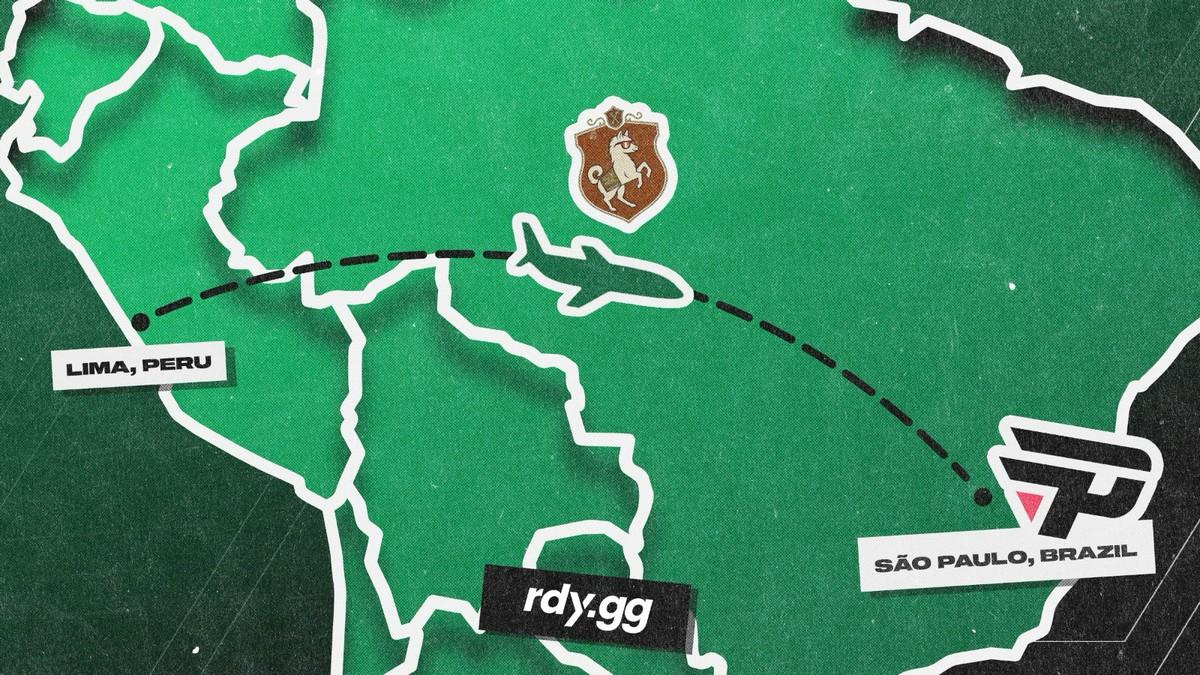
paiN Gaming is back to Dota 2 by signing Peru Rejects. As the deal was officially announced, we were fortunate to catch up with the team's coach, Juan "Vintage" Angulo, to discuss everything that happened in the past month.
From building the Peru Rejects roster and knowing how to play with Parker, to upsetting HEROIC in regional qualifiers, and now representing both Peru and Brazil at two of the most important upcoming tournaments under the paiN Gaming banner, Vintage walked us through the whole process.
The interview was conducted in Spanish and translated to English by Pedro Brauner.
Congrats on the qualifier results of this past month. You secured two of three events. What was the toughest challenge you had to overcome to get these results, besides the actual teams?
It was quite complicated given the external factors, as ElMisho and Scofield live in rural areas of Peru, where internet connectivity is limited. Scrims are quite difficult because the ping is already high for those of us in Lima, Peru. That was one of the biggest and one of the most complicated things we had to solve. But, at the same time, the team synergy helped a lot.
Then, on some days, we experienced power outages. Small things that always happen when a team isn't in the same location together, which was to be expected, so to speak. Beyond that, I don't think it's been that complicated.
To follow up on this, where do ElMisho and Scofield live, if you can specify? And you also mentioned team synergy. Can you tell us more about this, because these are players who have played together in the past, but not as a full team?
Scofield lives in Chupaca. It's a small town in Huancayo, a very remote area from Lima. And in ElMisho's case, he lives in Huánuco, a city that's also quite far from the capital. Actually, ElMisho and Scofield are closer to each other than to Lima.
Regarding synergy, I think it was quite easy because the nature of the players is very similar. So we understood each other very easily in terms of how we wanted to play Dota and what we wanted to do. Even though we had limited practice, we could quickly reach an understanding and focus on reaching key agreements to make the game easier for us. That helped a lot. Plus, of course, some had already played together at some point in their careers, like DarkMago, Parker, and Scofield.
Does this carry a special importance to you and your team, to be able to fully represent Peru at ESL One Birmingham and DreamLeague Season 28?
Yes, definitely. One reason Scofield decided to play these tournaments, even as he was considering taking a break, was that it had been a long time since a Peruvian team had represented the country abroad. So, he liked the idea of joining the team to compete in these qualifiers. And obviously, the fact that we're all Peruvian has a special significance for the community as well.
Scofield has flirted several times with the idea of retiring from professional play, but recently he published that text where he talked about how he'll keep playing until he physically can't do it anymore. What's his perspective as a player, and what does he bring to the team that perhaps other players don't?
Scofield wants to keep competing, but I think he's been playing for so long without stopping that he is looking for a way to do it more casually. If we're doing really well and we attend 10 tournaments, he would try to play at least 6 or 7—not all 10, because it would be too exhausting for him. I understand that he also has an elderly mother and tries to be with her and take care of her. That responsibility is a big deal for him.
However, he doesn't want to miss the most important competitions, such as DreamLeague or ESL. And regarding what he brings to the team, I think his biggest contribution is specifically how the team moves through the game. He has a clear vision of what needs to be done and communicates it with confidence. At the same time, since he's the one communicating the idea and the team respects him, it allows everyone to be on the same page, which is something a new team takes time to achieve, because everyone wants to find the best way to win. So, I think what he brings is confidence to the team and a more consolidated unity in what we want to do.
He also helps a lot with Parker, as he is able to control his overextensions. I think that's also very important. Maybe the others didn't have the confidence to tell Parker, "This is wrong," and just let him do his thing. On the other hand, when Scofield notices that a play isn't really necessary and will hurt the team, he doesn't let Parker do it. And Parker respects him so much that he cancels his play. I think those are the two strongest points he brings.
Well, the next question is how you all came together as a team. I mean, obviously, the clue is in the name, Peru Rejects, but walk us through how you formed this roster.
Well, it all started when I left OG LATAM. Unfortunately, the project wasn't going to have the support to provide a team with the necessary resources to compete. And it was perfectly understandable, they weren't going through a good economic moment. They always had good intentions and tried to do things right, but they weren't having a good moment.
So that's where my idea to form a roster came from. I wanted to create a competitive stack that could achieve results and get support, a structure, a salary that would allow us to be at peace and live off what we do. For us, this is a job, not a hobby.
I worked on this project with manager Edson, who's been a friend since my childhood basically, and he worked with me at Thunder Awaken, where we reached top 6 at TI in Singapore. For this project, I called him to see what we could do together.
Little by little, we started calling and testing players. At first, we were with Osito, N1ght, Yadomi, Sacred and with Payk. I think that was basically the beginning of Peru Rejects—the attempt to make a competitive team, but one that had several steps to take. We had certain problems. The thing with Matthew and Parker happened, which became public. The Division 2 DreamLeague thing happened, where we got eliminated. We were playing with packet loss, but people always criticise one point without taking all the conditions into account.
And there was also a lot of controversy because we played some tier 2 tournaments that, in my perception, weren't necessary to be played, honestly. They just caused more stress than anything else. Playing European tournaments with 180 ping against teams playing with 10 or 0 is a huge disadvantage, really.
But starting with Scofield's arrival, all these problems, or the negative image we had generated at the beginning, started to clean up a bit, to fade away. So, the idea basically revolves around all of that. It was the intention to build something that's Peruvian, something that represents us, and to seek the opportunity to have an organisation and do things right.
Some of the coaches we had the chance to talk with last year and worked with Parker in the past said that, although he is obviously an extremely talented player, he somehow manages to resist about 3 months on any roster. How confident are you that he sticks longer than that with your team?
I agree that Parker is quite a skilled player, but also quite complicated. I'm not sure if "discipline" is exactly the right word, because regarding mechanics and playing, Parker has to be the one who plays the most Dota in the entire region. I'd even dare to say one of the players who plays the most Dota per day in the world. I think the issue with Parker is a bit about his attitude.
Sometimes he's in a good mood, sometimes not so much. He also needs to feel comfortable with his teammates to unleash his potential. I think one factor that allows him to feel at ease on this team is the guys' personalities: they're calm and fun at the same time. Even when things went poorly for us in the last qualifier, we knew how to reset our mindset. Obviously, there's frustration during the game, but we then identify what went wrong and replan quickly. I think that's a strength this team has. We are friends, and when we lose a game, there's no piling on someone.
For example, when Parker shows up late to a scrim, the team doesn't get mad at him. It's like everyone accepts how he is and knows he doesn't do it with bad intentions; he's just Parker. If there's an ideal team for Parker, then this is it. He feels valued and understood by the team.
Let’s go into the big announcement from earlier today. paiN Gaming is coming back to Dota 2 by signing Peru Rejects. Congrats, first of all and if you can, share some insights of how that happened.
We had offers from other organisations as well. Some seemed like a risk; others were interested but not ready to sign us right now. At the same time, we were very surprised by the level of investment paiN was willing to make. paiN has offered us a first-class structure. We're going to have a bootcamp in Europe. Now we're going to Serbia about 10 days before DreamLeague. Also, for ESL Birmingham, we will go to England about 10 days before to do a bootcamp there too.
We also set for a two-year contract with renegotiation. They're not looking to enter Dota just for one year to see what happens. They want to build the same structure they have in CS2, they want something long-lasting.
This is great news, and we are glad to see paiN Gaming back to Dota 2, but at the same time, we are once again in a tough situation for the SA region. The DPC is gone for a few years, some tournament organisers have started to merge SA and NA qualifiers once again, and it’s obviously impacting the fragile ecosystem in the region. How do we resuscitate the SA scene? What should happen for South American Dota to get a revival?
I’d say the main thing is to maintain structure and make good decisions. I think basically South American teams, when they reach a peak in performance, tend to make bad decisions. I think, for example, in HEROIC's case, removing Scofield cost them these qualifiers. Maybe they could have made that change after qualifying. That would have perhaps been a smarter move.
And maybe in my case with the teams I was on, there were also changes that were too quick or drastic, made at moments they shouldn't have been made. Regarding international organisations, I think there will always be interest as long as there are results. Since there's the Esports World Cup, which is very important for teams—our SA region always has the opportunity to reach that tournament, whether through one slot or two.
There's a lot of talent in this region, and the problem has always been the lack of structure or lack of professionalism, which I think has been gradually correcting itself. And I believe that now an organisation is coming in for us, and with HEROIC still in the scene, we'll be able to do a better job. I think people have understood well what they've done wrong. There are things that will definitely be corrected, and I think with time, the region will finally establish itself as a stable one. Stability is what SA needs above everything else.